
Vacuum the track, scrub with a nylon brush, wipe clean, and spray silicone lubricant. Takes 10-15 minutes. Do it every 3 months (monthly if you have pets). Never use WD-40, bleach, steel wool, or pressure washers on tracks. If cleaning doesn't fix a sticky door, the rollers need replacing ($149-$299).
Treasure Coast Sliding Door Repair cleans sliding door tracks on every single job we do. After 3,500+ repairs across Stuart, Port St. Lucie, Fort Pierce, Jensen Beach, and Vero Beach, we can tell you this: a dirty track is the number one preventable cause of sliding door problems. Sand, pet hair, pollen, dead insects, construction dust, and salt residue all pack into those narrow channels. Every time you open or close the door, the rollers grind through that debris. It's like driving on a gravel road instead of a paved one. The wheels wear out faster, the ride is rougher, and something eventually breaks. Here's how to clean your tracks the right way.
Tools You'll Need
Everything on this list costs under $15 total, and you probably own most of it already. You'll need a vacuum cleaner with a crevice attachment (the narrow nozzle that fits into tight spaces), an old toothbrush or a stiff nylon brush, a few rags or paper towels, a small bucket of warm soapy water (dish soap works fine), baking soda for tough buildup, and a can of silicone-based spray lubricant. That's it. No special tools. No expensive products. The whole job takes 10 to 15 minutes per door. Have a flashlight handy too, because the bottom of the track is hard to see clearly, especially in darker rooms.
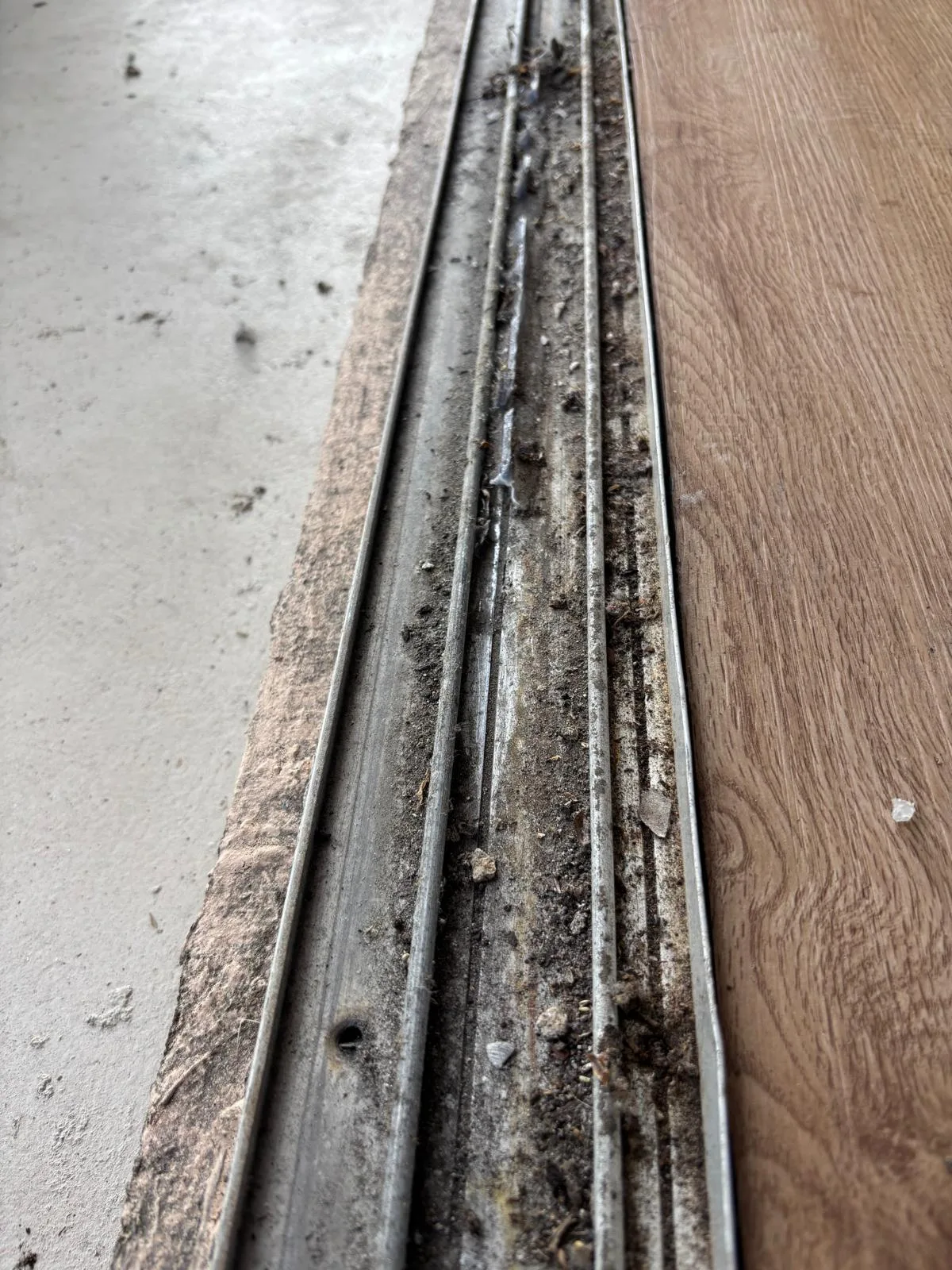
This is what months of neglect look like
Pet hair, sand, dead insects, and hardened grime packed into both channels. The door was nearly impossible to open. Ten minutes of cleaning got it moving again. Regular maintenance would have prevented this entirely.
Step 1: Vacuum Out All Loose Debris
Start by running the crevice attachment along the full length of the bottom track. Go slowly and get into both channels. You'll pull out more than you'd expect, especially if it's been a while since the last cleaning. Hair, dust bunnies, crumbs, sand grains, leaf fragments. On Treasure Coast homes near the beach or the Indian River Lagoon, we often find a layer of fine sand that's nearly invisible until you vacuum it out. Hit the corners where the track meets the door frame on both ends. That's where debris compacts the hardest. If your vacuum has a brush attachment, use it after the crevice tool to loosen anything stuck to the track surface.
Step 2: Scrub the Caked-On Grime
After vacuuming, you'll see the stuff that didn't come up. Hardened dirt, dried moisture stains, maybe some green mildew if the track stays damp. Dip your toothbrush or nylon brush into warm soapy water and scrub along both rails of the track. Work in short back-and-forth strokes. For really stubborn buildup, make a paste with baking soda and a few drops of water. Spread it on the worst spots and let it sit for 5 minutes. The baking soda gently loosens hardened grime without scratching the track surface. Then scrub and wipe. For homes in Jensen Beach and along the causeway, salt deposits are common. A damp rag with warm water dissolves salt residue better than soap.
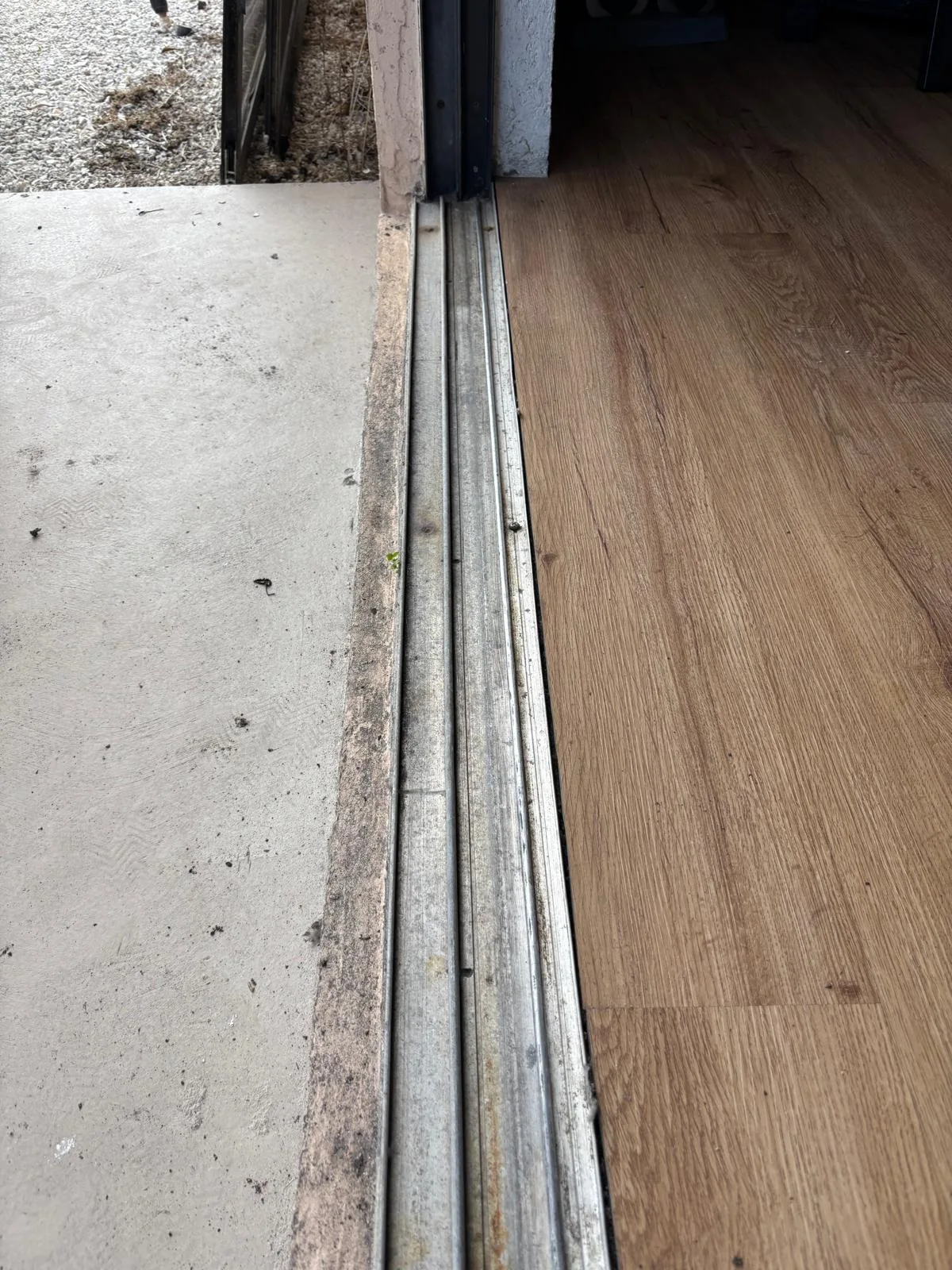
Clean rails make a huge difference
After cleaning, the roller wheels spin freely on smooth metal instead of grinding through debris. This single step can make a sticky door glide like new, and it adds years to your roller life.
Step 3: Wipe and Dry the Track
Once you've scrubbed everything loose, wipe the entire track with a damp cloth to pick up all the remaining particles. Then go over it with a dry rag. You want the track completely dry before applying lubricant. Moisture trapped under silicone spray can promote corrosion, especially on steel or uncoated aluminum tracks. Use a cotton swab or a folded paper towel to get into the narrow grooves along the rail edges. Those tiny channels guide the roller wheels, and even a thin layer of gunk there can cause the door to hitch as it slides. Check the upper track too, the channel at the top of the door frame. It doesn't collect as much debris, but it still needs a wipe-down.
Step 4: Apply Silicone Lubricant
With the track clean and dry, spray a thin coat of silicone-based lubricant along both rails of the bottom track. Don't soak it. A light, even coat is all you need. Then slide the door back and forth 5 or 6 times to work the lubricant across the full length and into the roller contact points. Spray a small amount into the upper track channel too. That's it. Your door should feel noticeably smoother. Silicone spray costs $5 to $8 at any hardware store, and one can lasts a full year of quarterly applications. Manufacturers like Pella, Andersen, and PGT all recommend silicone spray for track maintenance.
Never use WD-40 on sliding door tracks.
WD-40 is a solvent, not a lubricant. It evaporates quickly and leaves behind a residue that attracts dirt and dust. You'll feel a brief improvement, then the track will be dirtier than before. Silicone spray is the right product. It doesn't attract debris, it repels moisture, and it's safe for all track materials.
What NOT to Use on Sliding Door Tracks
We've seen homeowners accidentally damage their tracks trying to clean them with the wrong products. Here's what to avoid. Don't use bleach or harsh chemical cleaners. They corrode metal hardware and can damage the finish on aluminum tracks. Don't use steel wool on aluminum tracks. Steel wool scratches the surface, creating tiny grooves that collect dirt even faster. Don't use abrasive powdered cleaners like Comet or Ajax. Same problem, they scratch the track. Don't use a pressure washer. It might blast the track clean, but it forces water into the wall cavity behind the threshold, which can cause mold and rot. And don't use any petroleum-based lubricant, including Vaseline. Petroleum products attract dirt and gum up over time. Stick with warm water, mild soap, a nylon brush, and silicone spray. Simple and safe.
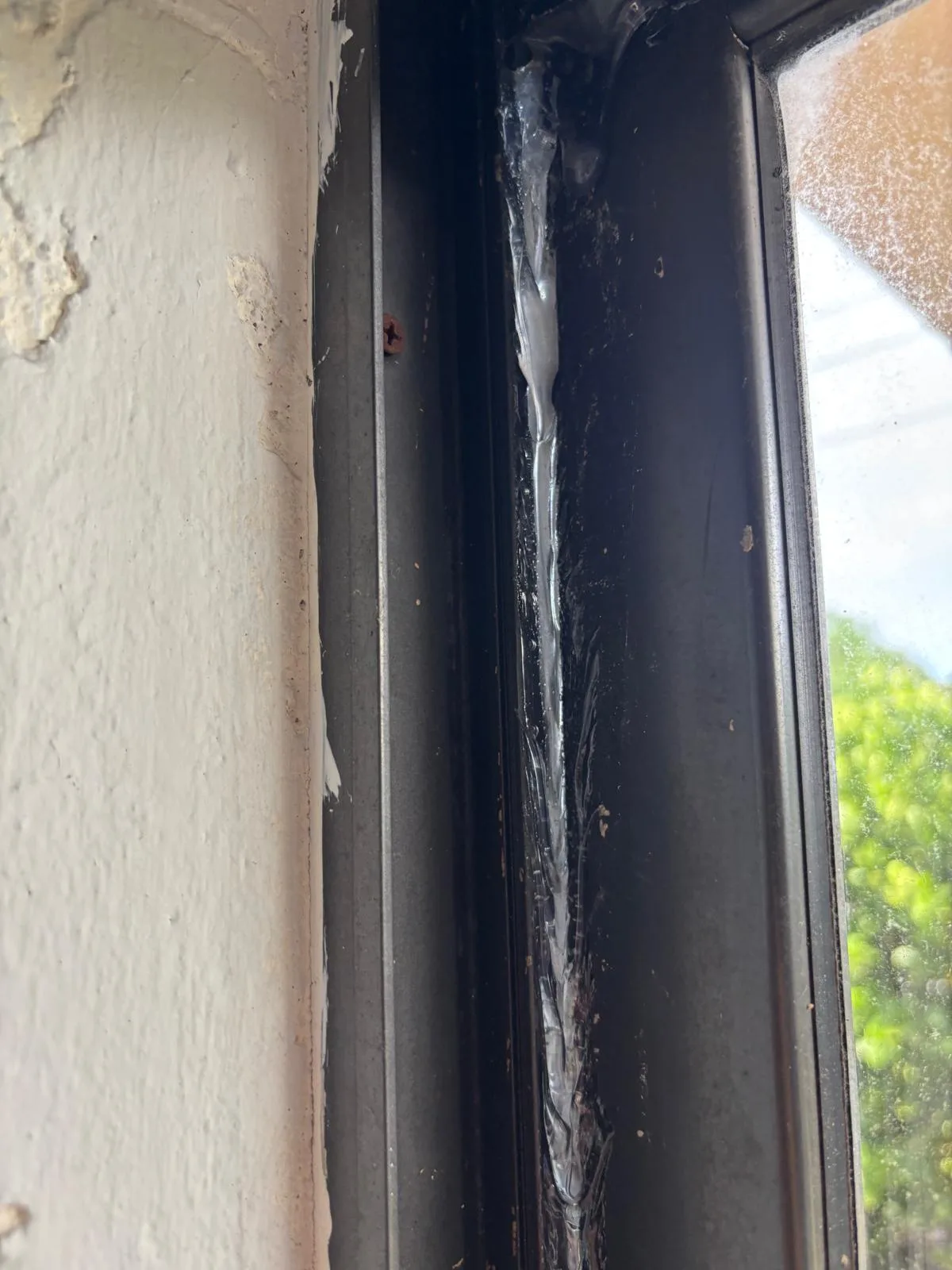
When the track itself is the problem
See the bent metal and corroded cap? No amount of cleaning fixes physical damage. If your track has dents, bends, or corroded-through sections, it needs professional track repair ($129-$349).
How Often to Clean Your Tracks
For most Treasure Coast homes, clean the tracks every 3 months. That's four times a year, roughly matching the seasons. If you have one or more of these situations, bump it up to monthly: pets (pet hair is the top track debris we see), coastal location within a mile of the water, active construction in the neighborhood, a track that faces a pool or lanai (chlorine residue and splash water), or a door that gets heavy daily use. Mark it on your calendar or tie it to another routine. Every time you change your AC filter? Clean the tracks too. It's the same kind of preventive maintenance that saves you money long-term. Fifteen minutes and a $6 can of silicone spray versus a $249 roller replacement. Easy math.
When Cleaning Isn't Enough
You've cleaned the track, lubricated it, and the door still doesn't slide right. What now? The problem has moved beyond dirty tracks. If the door sticks or drags after cleaning, the rollers are worn. Cracked wheels, flat spots, or corroded bearings won't spin properly no matter how clean the track is. Roller replacement costs $149 to $299 per panel. If you feel the door catching at one specific spot, the track is probably bent or dented at that point. Run your finger along the rail and feel for bumps or dips. Track repair runs $129 to $349. If the door wobbles or leans when you push it, the panel might be out of alignment. Alignment adjustment costs $99 to $199. Call (772) 207-4146 and describe the symptoms. We can usually tell you over the phone whether it's a DIY fix or a service call.
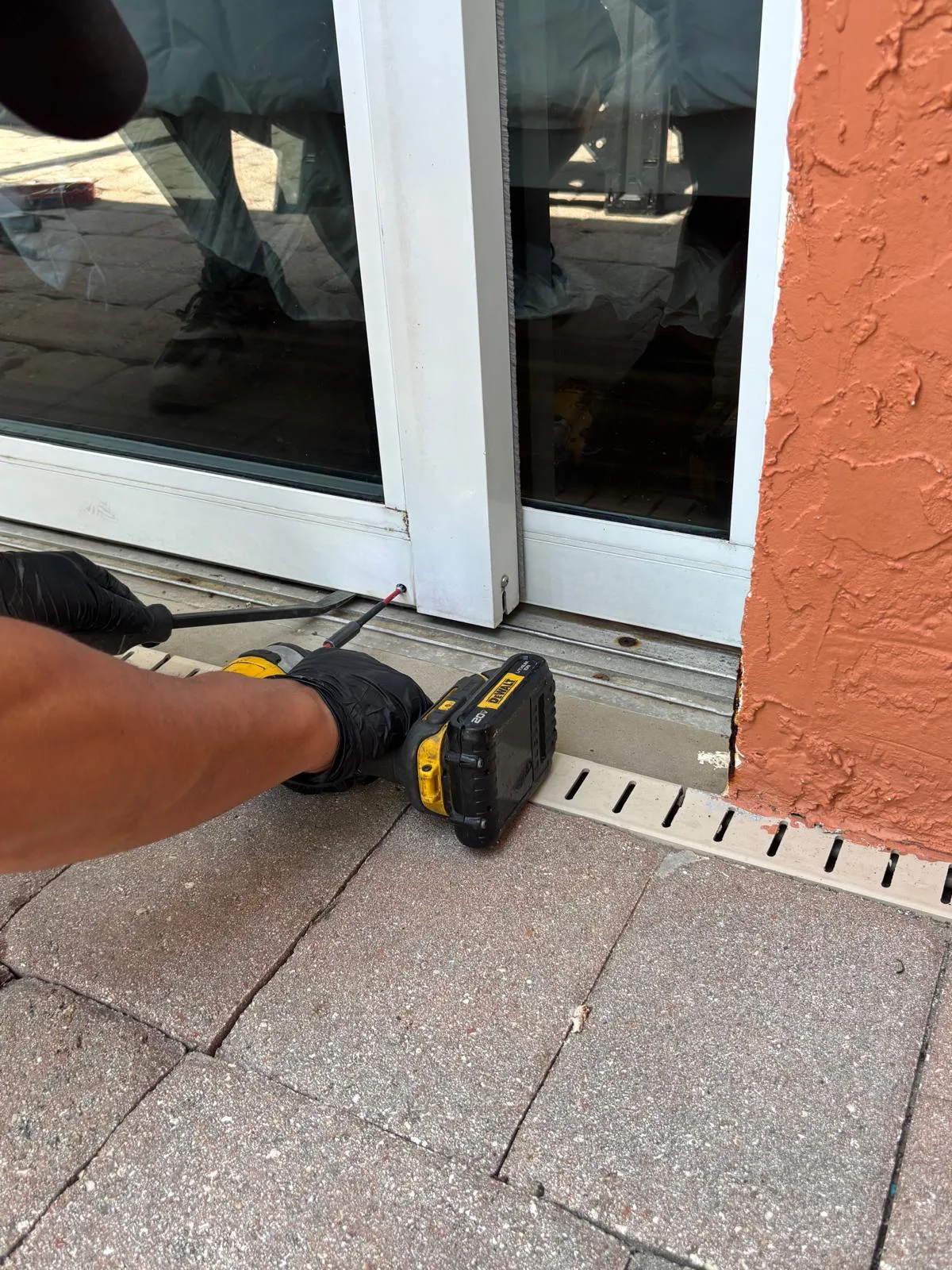
Clean track, bad rollers
This homeowner in Port St. Lucie kept the tracks spotless. But the rollers were 11 years old and the bearings were shot. Fresh rollers and a clean track? That door slides with one finger now.
The Don't-Forget Upper Track
Most people focus only on the bottom track. Makes sense, that's where the rollers run and the dirt collects. But the upper track matters too. The top of the door panel sits in an upper channel that keeps the door aligned and prevents it from swinging outward. Dust, cobwebs, and insect debris build up in that upper channel over time. A quick wipe with a damp cloth during your quarterly cleaning is all it needs. While you're up there, check that the door panel still fits snugly. If there's a lot of vertical play (the door lifts more than 1/4 inch), the upper channel might be worn or the door could be a security risk. Someone could lift it right out of the track.