
Signs you need automatic sliding door repair include slow response, grinding sounds, doors stopping mid-open, and sensors that don't trigger. In Fort Pierce, most repairs run between $200 and $600 depending on what's failed. Don't wait. A door that hesitates today can become a door that won't move tomorrow.

Here's the short answer: if your automatic sliding door is slow to open, makes grinding or scraping sounds, stops halfway, or just doesn't respond when you walk up to it, you need automatic sliding door repair. We've been diagnosing and fixing these doors across Fort Pierce and the Treasure Coast since 2009, and those four symptoms cover about 80% of the calls we get. We've completed over 3,500 automatic door repairs in that time, and we hold a 4.9-star rating across 47 Google reviews. We say that not to brag, but because we want you to know we've seen basically every version of this problem. Salt air from the Fort Pierce Inlet, humidity that climbs past 90% in the summer, and high-traffic commercial use all put serious stress on automatic door systems. Most doors in St. Lucie County start showing symptoms long before they fully fail. The trick is knowing what those symptoms look like before you're stuck with a door that won't move. Automatic sliding door repair in Fort Pierce typically costs between $200 and $600, depending on what's failed. You can get the full picture on our automatic sliding door repair service page.
The Most Common Warning Signs You Shouldn't Ignore
Most automatic sliding doors don't just stop working out of nowhere. They warn you first. The problem is those warnings are easy to brush off, especially in a busy commercial space where the door is opening and closing hundreds of times a day. Here are the signs we see most often when we get called out to Fort Pierce businesses and properties:
- Slow response time: The door takes more than a second or two to open after you step in the sensor zone
- Grinding or scraping sounds: Usually a roller or track issue
- Door stops mid-travel: Opens partially and then reverses or stalls
- Inconsistent triggering: The door opens for some people and not others
- Visible gap when closed: The door panels don't meet the way they used to
- Motor running but door not moving: The drive belt or gear may have failed
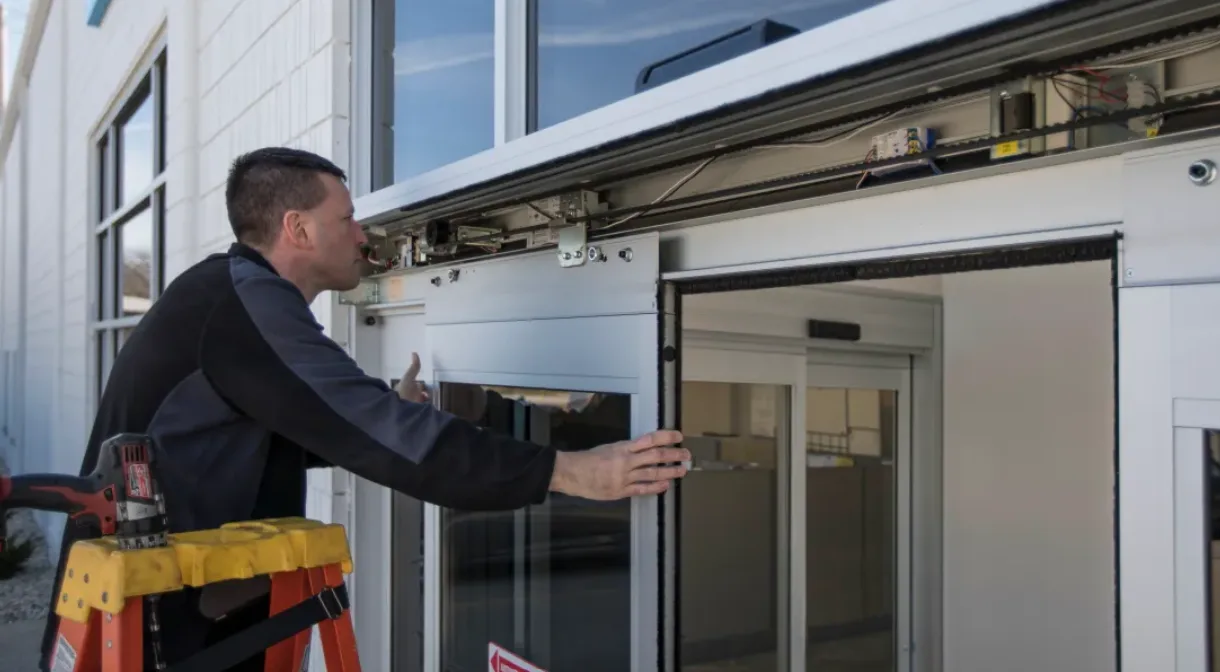
What Worn Rollers Actually Look Like
This is what a set of rollers looks like after a couple of years of salt-air exposure and heavy use near the Fort Pierce waterfront. The plastic housing cracks, the bearing surface wears flat, and the door starts dragging. We'd estimate about 85% of stuck automatic doors in Fort Pierce trace back to roller wear as at least a contributing factor. Once a roller flattens out, it puts stress on everything else in the system.
What Happens If You Wait Too Long
We get it. A door that's a little slow doesn't feel like an emergency. But here's what we've seen happen when people put off the call. A worn roller starts dragging on the track. That extra friction puts load on the motor. The motor runs hotter than it should. Over time, the motor burns out. Now you've gone from a $200–$300 roller replacement to a $450–$600 motor job, or worse, a full system replacement. There's also a liability angle that a lot of Fort Pierce business owners don't think about. Under the Florida Building Code 8th Edition, automatic doors in commercial settings must meet specific safety and accessibility standards. A door that hesitates or reverses unexpectedly may not be up to code. If someone gets caught in a door that's malfunctioning, that's a real insurance and legal exposure. We're not trying to scare anyone. We just want you to know that what feels minor usually isn't. Repairs that come in under $300 are common when we catch things early. They get more expensive the longer the underlying problem runs.
Urgency Levels: How to Prioritize What You're Seeing
Not every symptom needs same-day service. Here's a quick breakdown of how we'd triage the issues we see most often in St. Lucie County:
- Call today (high urgency): Door won't open at all, door won't close or lock, door reverses and catches on people, motor running continuously with no movement
- Schedule this week (medium urgency): Slow response on sensor trigger, grinding sound on every cycle, door stops once a day or more, visible panel misalignment
- Watch and schedule soon (low urgency): Occasional hesitation, subtle increase in sound level, door takes slightly longer in cold or very humid weather
Fort Pierce Climate Is Hard on Automatic Doors
Salt air from the Intracoastal and Indian River Lagoon accelerates corrosion on tracks, rollers, and hardware - a challenge intensified during hurricane season prep when salt spray reaches inland properties. Humidity above 85% is common from May through October, which affects sensors and electronic components. If your door is within a few miles of the water near Port St. Lucie or Jensen Beach, plan on more frequent inspections and hardware replacements. We recommend at least one professional check per year for coastal properties, especially before the Atlantic hurricane season begins. Read our guide on keeping sliding doors running smooth for a full maintenance checklist.
Common Misdiagnoses: It's Not Always What You Think
One thing we've learned from 17 years on the Treasure Coast is that automatic doors get misdiagnosed a lot. Sometimes by well-meaning building managers, sometimes by general handymen who don't work on these systems regularly. Here are the misdiagnoses we see most often:
- 'It's the sensor' when it's actually the motor controller: A sluggish door often gets blamed on a dirty sensor. Sometimes that's right. But if the sensor checks out and the door is still slow, the issue is usually in the drive system, not the detection system.
- 'It needs lubrication' when the track is bent: Lubricating a bent track makes the door move smoother for a day or two. Then it binds again. The track needs to be straightened or replaced.
- 'It's fine, just leave it' when the door is out of balance: An unbalanced automatic door puts uneven load on the header and the drive belt. This one tends to cause expensive secondary damage if it's ignored.
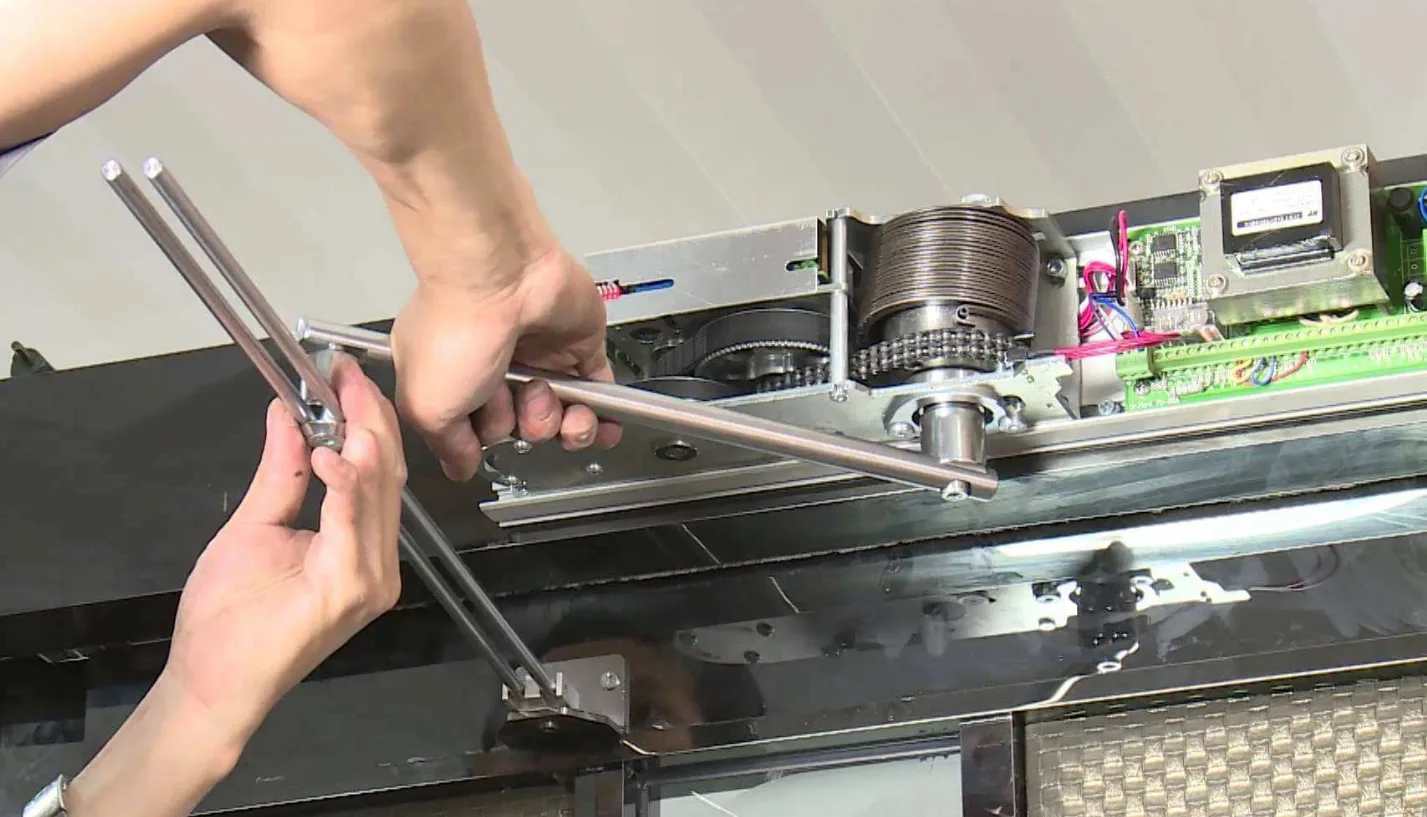
Sensor Problems Look Different Than You'd Expect
Most people assume a sensor problem means the door just doesn't open. That's sometimes true. But a partially misaligned sensor shows up as inconsistent triggering, where the door opens for tall people and not for kids, or works fine in the morning and stops triggering in the afternoon when the sun angle changes. That's a calibration and positioning issue, and it's one of the trickier diagnoses we do. We carry calibration tools on every service call.
What a Repair Actually Costs in Fort Pierce in 2026
We believe in straight talk about pricing. Here's what automatic sliding door repair typically costs based on what we see in Fort Pierce and the surrounding areas of St. Lucie County:
- Roller replacement: $200–$300 for most residential and light commercial doors
- Track repair or realignment: $225–$375
- Sensor recalibration or replacement: $200–$350
- Motor or drive belt replacement: $350–$600
- Full system diagnosis with minor adjustments: Starting around $200
When It's Probably Not a DIY Situation
We respect people who like to handle things themselves. We really do. But automatic sliding doors have a few components that make DIY tricky in ways that matter. The drive motor and controller systems in most commercial automatic doors are proprietary. The manufacturer often requires certified technicians for warranty repairs. If you tinker with the wrong component, you may void coverage you didn't know you had. There's also the safety sensor system. Under Florida Building Code 8th Edition requirements for commercial automatic doors in wind zones like Fort Pierce, the presence-sensing system has to meet specific performance standards. A door that someone has adjusted without proper tools may not pass an inspection, and in a worst case, it creates a real hazard for anyone using the entrance. For anything beyond cleaning a sensor or clearing visible debris from the track, we'd say call a pro. We've seen some creative repair attempts over the years. Most of them cost more to undo than the original problem would have. For a broader look at what you can and can't handle yourself, our post on an unusual sliding door repair call is a fun read and makes a serious point about the limits of general-purpose fixes.