
The most common signs you need automatic sliding door repair are slow or jerky movement, grinding or scraping sounds, doors that reverse unexpectedly, or sensors that fail to trigger. In Stuart, FL, salt air and humidity accelerate these problems significantly. Repairs typically run $200–$600 depending on the component. Don't wait. A door that hesitates today can fail completely by next week.

Your automatic sliding door opened fine this morning. By afternoon, it's hesitating, grinding, or stopping halfway through its cycle. Sound familiar? We hear this story constantly from property owners across Stuart and the broader Martin County area. The signs you need automatic sliding door repair are usually obvious once you know what to look for, but most people second-guess themselves until the door stops working entirely. We're Treasure Coast Sliding Door Repair. Since 2009, our team has completed repairs on 3,500+ sliding door systems throughout the Treasure Coast. We've seen every failure mode you can imagine, and we've developed a clear picture of what causes them, how fast they get worse, and what it actually costs to fix them. Our automatic sliding door repair service covers the full range, from sensor calibration and motor issues to roller replacement and track realignment, with most repairs landing between $200 and $600. This post walks you through the real diagnostic process. We'll cover the warning signs that matter, the ones that don't (and what they're actually pointing to), and what happens when you let problems sit too long in Florida's coastal climate.
What Are Signs I Need Automatic Sliding Door Repair?
This is the question we get most often, and the direct answer is this: if your door is doing anything other than opening smoothly and closing fully, something is wrong. Automatic doors are engineered for consistency. Variation is a symptom. Here are the specific signs that tell us a door needs attention:
- Slow or sluggish movement on the open or close cycle
- Grinding, scraping, or clicking sounds during operation
- Door reverses before fully closing or reopens without trigger
- Sensors fail to activate or activate inconsistently
- Door stops midway through its travel path
- Visible gap when fully closed, creating a seal failure
- Jerky or stuttering motion instead of smooth gliding
- Error codes or warning lights on the control panel
What Happens If You Wait to Get It Repaired?
We get it. A slow door feels like a small problem. But automatic sliding door components are interdependent. When one part works harder to compensate for another that's failing, wear accelerates across the whole system. Here's the progression we've documented across hundreds of service calls:
- Week 1–2: Door hesitates. Sensor may be dirty or misaligned. Cost to fix: typically $200–$250.
- Week 3–4: Motor is now straining. Rollers begin to flatten. Track may be developing burrs from uneven load. Cost climbs to $300–$400.
- Month 2+: Motor controller burns out. Track warps. Door fails completely. You're now looking at $500–$600 plus possible hardware replacement.
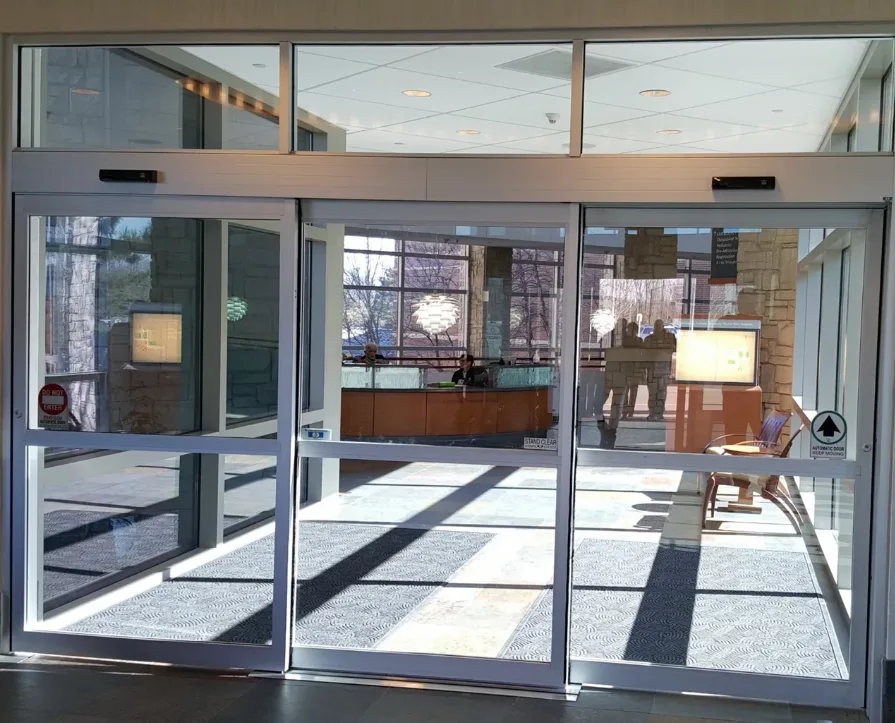
Salt Air Is the Hidden Accelerant
Properties near the St. Lucie River, Sailfish Point, or anywhere along Stuart's waterfront face a problem that inland locations don't. Salt air accelerates corrosion on metal rollers, tracks, and motor housings at a rate that surprises most property owners. We've pulled rollers off doors near the water that looked 10 years old after just 18 months of exposure. This is why routine inspection matters more on the Treasure Coast than almost anywhere else in the state.
Urgency Levels: Which Problems Need Same-Day Service?
Not every symptom demands an emergency call. But some do. Here's how our team categorizes automatic door problems by urgency:
- High urgency (call today): Door won't close at all, door is stuck open or stuck closed, safety sensors are completely unresponsive, door is making a loud grinding or banging noise
- Medium urgency (schedule within the week): Door is slow but still cycling, occasional failure to trigger, mild scraping sound, visible track debris
- Lower urgency (schedule within 2–3 weeks): Minor seal gap, slight hesitation at start of cycle, intermittent sensor delay
Stuart Property Owners: Watch for This Specific Pattern
If your automatic door works fine in the morning but struggles or fails in the afternoon heat, that's a thermal expansion issue. Florida's afternoon temperatures cause metal tracks and door frames to expand, and a door that was installed with tight tolerances will bind as the day heats up. This pattern is common in Stuart between May and October. It's fixable, but it won't resolve on its own. If you're seeing this, schedule a track inspection before the door fails entirely during your busiest hours.
Common Misdiagnoses That Waste Time and Money
This one matters. We've responded to a lot of calls in Stuart and across Martin County where a property owner or maintenance staffer already tried a fix that didn't work. Here are the most common misdiagnoses we see:
- "It's the sensors." Sensors get blamed for everything. But about 40% of the time, what looks like a sensor problem is actually a roller issue causing door misalignment that throws off the sensor's field of detection. Replace the sensor and nothing changes.
- "It just needs lubricant." Lubrication helps, but it won't fix a flattened roller, a bent track, or a failing motor controller. It can actually attract debris in dusty or coastal environments and make things worse.
- "The motor is bad." Motors are often assumed to be the problem because they're the most visible powered component. But motors rarely fail in isolation. Usually the motor is working fine and something upstream, like a failing capacitor or corroded wiring connection, is cutting power intermittently.
- "It's a programming issue." Control panel reprogramming is sometimes attempted first because it seems simple. For some issues, it is. But it won't address mechanical wear, which is the root cause in most cases we see on the Treasure Coast.
What a Proper Inspection Covers
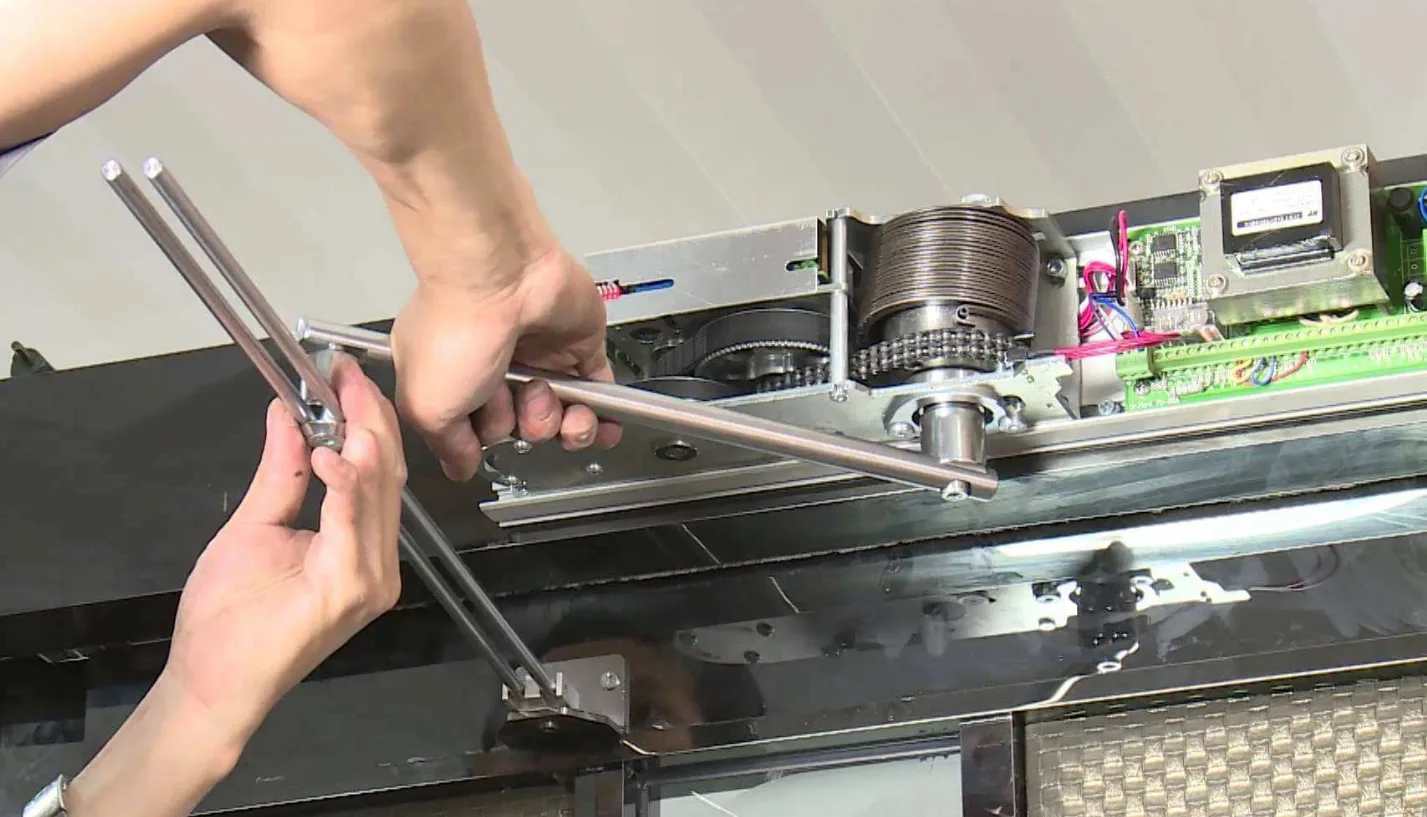
A thorough automatic door inspection goes far beyond a quick visual once-over. Our team examines roller condition and bearing play, track alignment from end to end, motor amp draw under load, sensor activation zones, safety reverse testing, and control system error logs. Given Treasure Coast's intense salt-air exposure and the upcoming 2026 hardware compatibility standards, we also inspect for corrosion at every fastener point and wiring connection - paying special attention to UV-degraded seals that accelerate wear. This comprehensive approach is what separates an accurate diagnosis from assumptions, and it's why we identify the right solution on the first visit 94% of the time.
Automatic Sliding Door Repair Costs in Stuart in 2026
Here's what you can realistically expect to pay for automatic sliding door repair in Stuart, FL in 2026:
- Sensor cleaning and calibration: $200–$250
- Roller replacement (standard set): $250–$350
- Track cleaning, realignment, and adjustment: $200–$300
- Motor inspection and belt/drive replacement: $300–$450
- Control board or motor controller replacement: $400–$600
- Full system service (rollers, track, sensors, motor check): $400–$600
Florida Building Code and Automatic Door Compliance
If you manage a commercial property in Stuart, automatic door compliance isn't optional. The Florida Building Commission's 8th Edition of the Florida Building Code includes specific provisions for automatic pedestrian doors, covering safety sensing devices, breakout force requirements, and opening speed limits. Martin County enforces these standards, and insurance carriers are increasingly asking about door compliance during policy renewals for commercial properties. A door that's malfunctioning may also be a door that's out of spec, and that creates exposure. Wind zone requirements here on the Treasure Coast also affect what hardware is appropriate for automatic sliding systems. Stuart sits in a region that demands wind-rated hardware in many applications. If your automatic door has been repaired before with non-rated components, it's worth having that checked. We're familiar with both the code requirements and the practical realities of what's installed in older Stuart commercial buildings. If you need more background on related mechanical issues, our step-by-step guide on stuck sliding doors covers the mechanical side in plain language.