
Most automatic sliding door repairs take 1–3 hours for a scheduled appointment, or as little as 2–4 hours with same-day emergency service. Repairs in Port St. Lucie typically run $200–$600 depending on the issue. Salt air and humidity from the Treasure Coast climate speed up wear, so don't wait on a sluggish door.
Here's the straight answer: most automatic sliding door repairs take between 1 and 3 hours from the time our tech arrives at your door. That's for a standard repair, like a worn motor, a bad sensor, or damaged rollers. Some jobs wrap up in under an hour. A few take closer to half a day if parts need to be sourced or if years of Port St. Lucie salt air have done more damage than it looks. We've been handling automatic sliding door repair across St. Lucie County since 2009, and we've completed more than 3,500 door repairs in that time. So when we give you a timeline, it's not a guess. It's based on what we actually see on the Treasure Coast every single week.
What the Typical Repair Timeline Looks Like
When you call us for a scheduled repair, here's how the day usually goes. We arrive at the agreed window, run a quick diagnostic on the door system, and give you a firm quote before we touch anything. That diagnostic step takes about 15–20 minutes on its own. Then the actual repair begins. For simpler jobs, like recalibrating sensors or adjusting the door's closing speed, we're done in under an hour. Mid-level repairs, replacing rollers, fixing a motor belt, or reprogramming the control board, run 1–2 hours. Full motor replacement or track overhaul typically lands in the 2–3 hour range. On rare occasions, if a part isn't on our truck, we may need to order it and return. That adds time, but we'll always tell you upfront. We hold a 4.9-star rating across 47 Google reviews, and honest timelines are a big part of why.
Scheduled vs. Emergency Repair: What's the Difference?
Scheduled repairs give us time to pull your door's make and model in advance, load the right parts on the truck, and plan around your day. That's usually the fastest path to a finished repair. Emergency calls work differently. If your automatic door is completely stuck open, closed, or making a grinding noise that won't stop, we offer same-day and after-hours service in Port St. Lucie and the surrounding areas. Response time on emergencies is typically 2–4 hours from your call. The repair itself still takes the same amount of time once we're on-site. The difference is the wait. Emergency service may also carry an additional dispatch fee depending on the time of day, so it's worth asking about that when you call. For non-urgent issues, scheduling ahead almost always saves you money and gets the job done cleaner.
The Diagnostic Step Matters More Than You Think
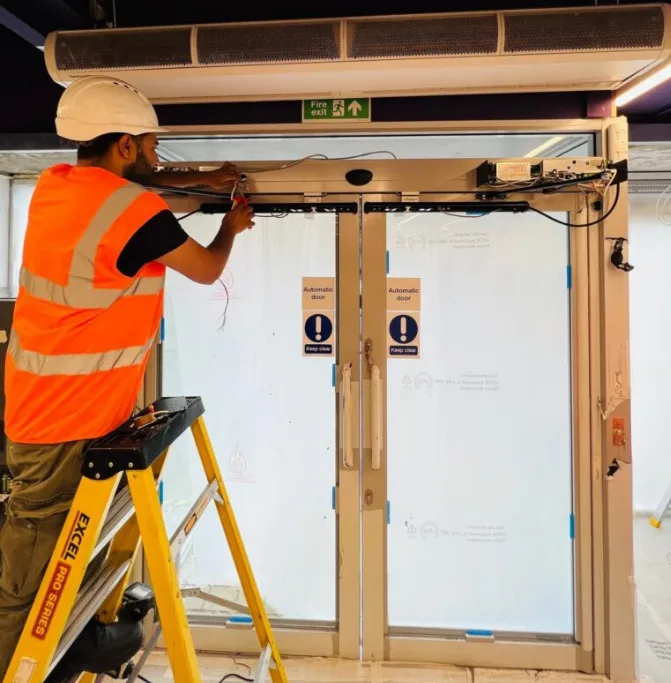
Skipping a proper diagnostic is one of the biggest reasons door repairs take longer than they should. Our techs check the motor, sensor alignment, track condition, and control board before quoting any work. That 15-minute investment at the start prevents a two-trip repair later.
What Causes Repair Delays on the Treasure Coast
Living near the St. Lucie River and the Atlantic coast is great for a lot of things. It's not great for automatic door hardware. Salt air accelerates corrosion on tracks, rollers, and motor housings. High humidity causes seals to swell and sensors to fog up. We'd estimate that about 70% of the automatic door calls we get in Port St. Lucie involve some degree of corrosion-related wear that goes beyond the original reported problem. That's what causes delays. You call about a slow door, and we find a motor that's halfway seized and a track that needs replacing too. Other common delay factors include:
- Non-standard or older door models with hard-to-find parts
- Commercial doors that require code compliance checks under the Florida Building Code 8th Edition
- Doors that were previously repaired incorrectly by someone else
- Multi-panel systems with more components to inspect
How to Prepare Before We Arrive (Saves Real Time)
A little prep on your end can shave 20–30 minutes off the repair, especially for commercial locations. Here's what helps:
- Clear the area around the door. We need about 3 feet of working space on both sides.
- Know the door's brand or model if you have that paperwork. Even a photo of the manufacturer label helps.
- Write down what the door is doing, not just that it's broken. Is it slow? Noisy? Stopping mid-cycle? Reversing on its own?
- Make sure power to the door is accessible. We may need to reset the breaker as part of the diagnostic.
- For businesses, have a manager or facilities contact available who can authorize the work.
Don't Leave a Stuck Door Until Tomorrow
An automatic sliding door stuck in the open position is a security risk, a liability issue, and with Treasure Coast hurricane season approaching, a vulnerability that worsens when salt-air corrosion weakens door mechanisms during extended power outages. If your door won't close, call us now. We offer same-day service in Port St. Lucie and can often get a tech out within a few hours. Repairs run $200–$600 depending on what we find, and addressing corrosion early prevents costlier component failures later as 2026 hardware standards shift industry specifications. A quick call today is a lot cheaper than a break-in, inventory loss, or emergency repairs during peak season tomorrow.
Automatic Sliding Door Repair Cost Breakdown by Job Type
We price our automatic sliding door repairs based on what the job actually involves. Here's a general look at how that breaks down in 2026:
- Sensor recalibration or adjustment: $200–$275, usually under 1 hour
- Roller or track replacement: $250–$375, typically 1–2 hours
- Motor belt or drive replacement: $300–$450, about 1.5–2 hours
- Full motor replacement: $400–$600, usually 2–3 hours
- Control board reprogramming or swap: $350–$500, 1.5–2.5 hours
Salt Air Damage Looks Worse Up Close
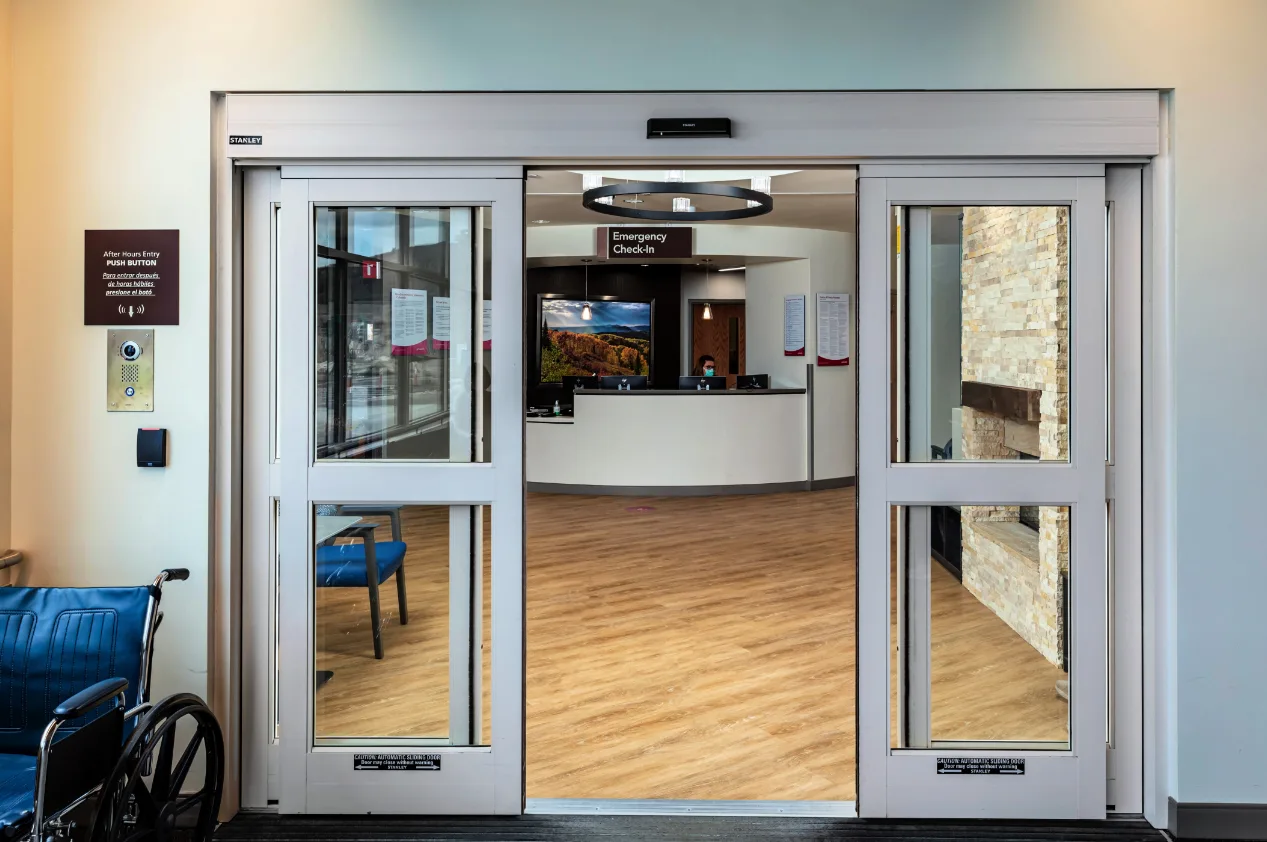
This is what a motor housing looks like after a few seasons of Treasure Coast humidity without proper maintenance. That white corrosion on the contacts is enough to cause intermittent failures that look like a software problem but are actually a hardware problem. Catching it early during a scheduled service visit keeps the repair cost in the lower range of the $200–$600 window.
When a Repair Visit Turns Into a Replacement Conversation
It doesn't happen often, but sometimes we arrive for a repair and the honest answer is that a full replacement makes more sense. We'll always walk you through why. The signs we look for include: a motor that's been replaced more than twice, track damage that's structural rather than surface-level, or a door system that's so old it no longer meets the Florida Building Code 8th Edition requirements for wind resistance in St. Lucie County's wind zone. We're not going to push you toward a replacement just to upsell. We've been doing this since 2009, and our reputation here in Port St. Lucie depends on giving you the right answer, not the expensive one. If a repair gets you another 5–7 years of solid use, we'll repair it. If the door is past that point, we'll tell you that too, with numbers to back it up. Also check out our post on common sliding door problems to understand what's repairable and what's not.
Keeping Your Door Running Longer After a Repair
Once we've fixed the immediate problem, a little ongoing care goes a long way, especially in Florida's climate. Salt air and humidity don't stop working on your door just because we've replaced a worn part. We recommend a simple maintenance routine every 6 months: wipe down the tracks, check that sensors are clear of debris, and listen for any new grinding or hesitation in the door's movement. Our blog post on sliding door maintenance walks through the full process step by step. We also have a guide on how to fix a stuck sliding door if you want to troubleshoot before calling us. And if you're a commercial property owner, we'd suggest scheduling an annual inspection. It's a lot less disruptive than an emergency call on a busy Saturday morning, and it keeps you ahead of any automatic door compliance requirements under current Florida code.