
Most squeaky sliding doors just need track cleaning and silicone spray ($0-$10 DIY). Clean the track with a vacuum and toothbrush, then spray dry silicone lubricant along the channel. If the squeak returns within a week, your rollers are likely worn and need professional replacement ($149-$299 per panel). Never use WD-40. Call (772) 207-4146 if DIY doesn't fix it.
A squeaky sliding door is one of those problems that starts small and gets under your skin fast. Treasure Coast Sliding Door Repair hears about it constantly from homeowners across Port St. Lucie, Stuart, and Jensen Beach. The good news? About half the time, you can fix it yourself in under 15 minutes with stuff you already have at home. The other half, the squeak is a warning sign that the rollers are dying and bigger problems are on the way. Here's how to figure out which situation you're dealing with.
What Actually Causes the Squeak
Sliding doors make noise for three reasons, and each one sounds a little different. Knowing which type of squeak you're hearing tells you exactly where the problem is and whether you can fix it yourself.
- Gritty squeak (like sandpaper): Dirt, sand, or debris in the track. The rollers are dragging through grit instead of gliding on a clean surface. This is the easiest fix.
- High-pitched squeal: Dry roller bearings. The metal-on-metal contact inside the roller wheel creates a thin, whiny sound. Common on the Treasure Coast because Florida's humidity causes bearing corrosion faster than dry climates.
- Low grinding squeak: Damaged rollers or a bent track. The roller wheels have flat spots or cracks, and they're scraping instead of rolling. This is the one that needs professional attention.
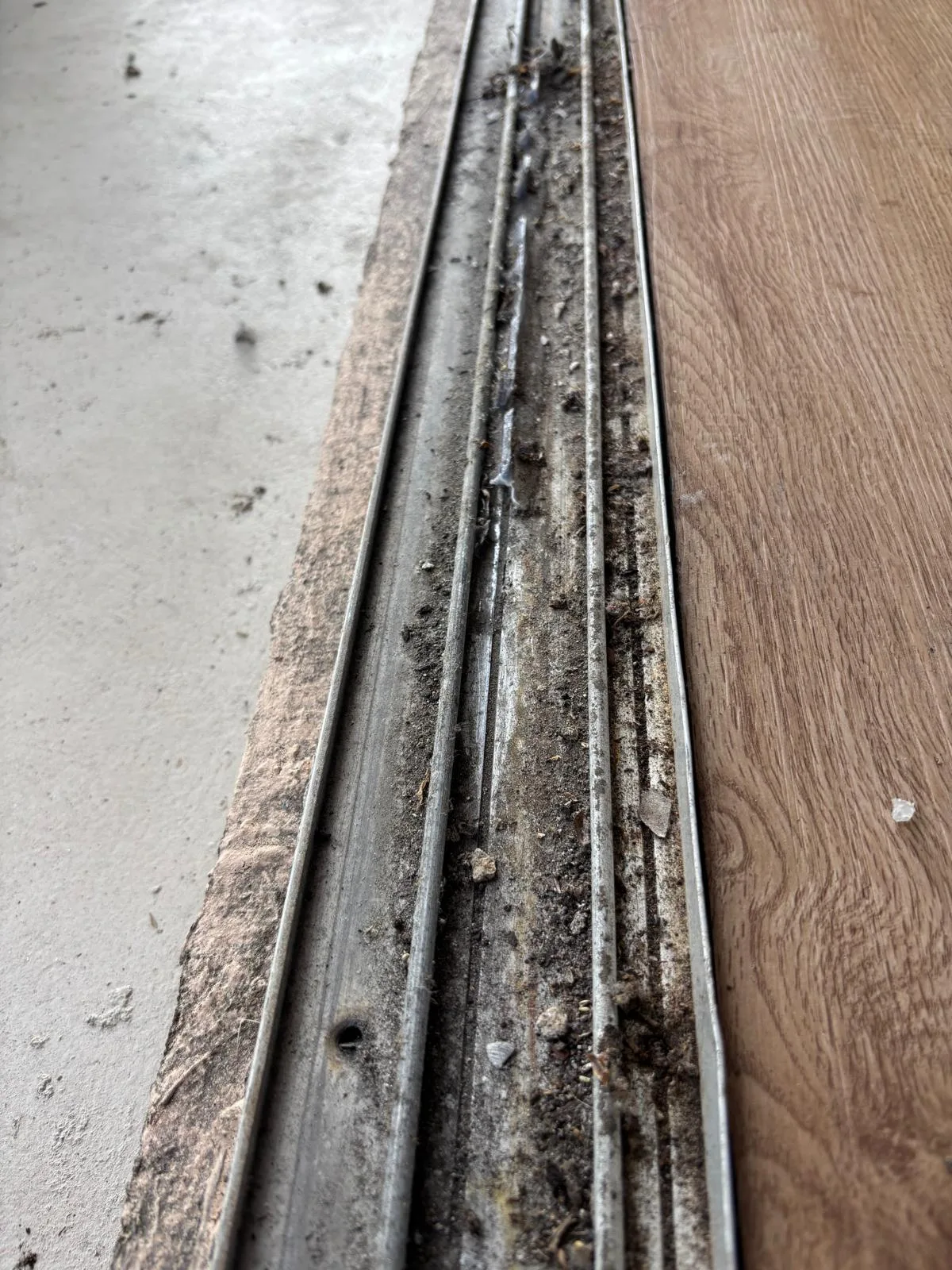
The #1 culprit
Look at your track right now. See dirt, sand, pet hair, or a dark gummy buildup in the channel? That's your squeak. The rollers can't spin smoothly through debris. A 10-minute cleaning fixes this about 50% of the time.
DIY Fix #1: Clean the Track
This is where you start. Always. Grab a vacuum with a crevice attachment and suck out everything in the track channel. Then take an old toothbrush (or a stiff brush) and scrub the track surface to break loose any caked-on grime. Vacuum again. For stubborn buildup, use a paste of baking soda and water, scrub, and wipe clean with a damp cloth. You'd be surprised how much junk builds up in a sliding door track, especially in Florida where we keep doors and windows open half the year.
Pay special attention to both ends of the track where debris tends to pile up against the frame. Also check for small pebbles or hardened dirt that got wedged into the track groove. Even one small stone can cause squeaking every time the roller passes over it.
DIY Fix #2: Apply Silicone Spray
After cleaning, spray a dry silicone lubricant along the entire track channel. Not WD-40. Not cooking spray. Not petroleum jelly. Dry silicone spray. It lubricates without leaving a sticky residue that attracts more dirt. You can find it at any hardware store for $5 to $10.
Spray a thin line along both track rails, then slide the door back and forth several times to distribute the lubricant. If you can access the rollers at the bottom of the door (some doors have access holes at the bottom edge), spray a short burst directly onto each roller wheel. Wipe up any excess with a clean cloth. Done.
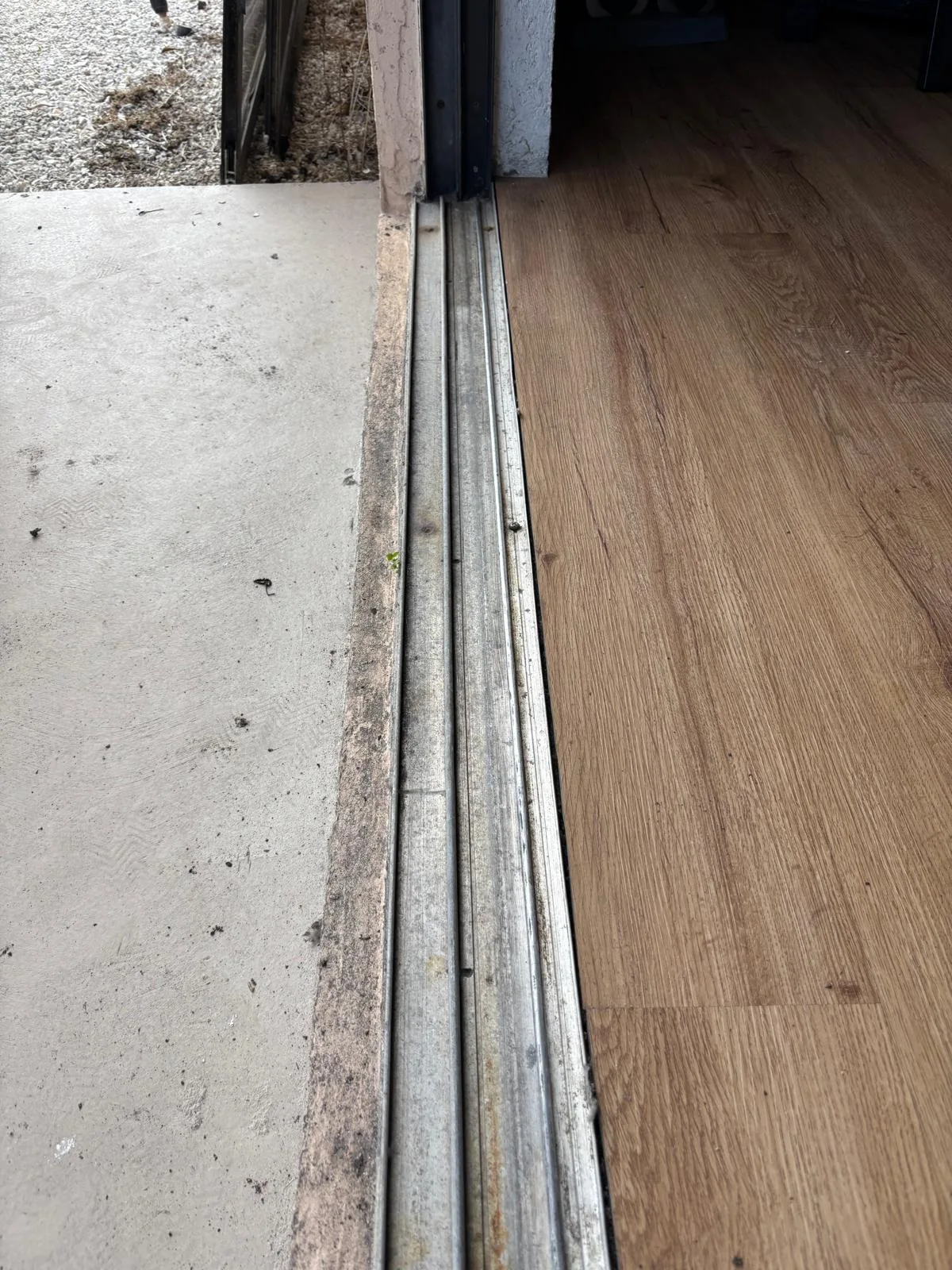
The right product matters
WD-40 is the most common mistake we see. It's a solvent that strips grease, attracts dirt within days, and actually makes squeaking worse long-term. Dry silicone spray (like 3-in-One or CRC brand) is the correct product. It stays slick without going gummy.
DIY Fix #3: Adjust the Roller Height
Most sliding doors have adjustment screws at the bottom edge of the door panel, usually hidden behind small plastic caps. These screws raise or lower the roller wheels, changing how the door sits in the track. If the door is sitting too low, it can rub against the track threshold and squeak. If it's too high, the rollers can lose proper contact and vibrate.
Remove the plastic cap, use a Phillips screwdriver, and turn the screw a quarter turn clockwise (typically raises the door). Slide the door to test. Adjust both sides evenly. Small adjustments make a big difference. If the door starts sliding more smoothly and the squeak stops, you've found the problem. This is part of what we cover in our door alignment service.
When the Squeak Means Bigger Problems
You cleaned the track. You sprayed silicone. You adjusted the height. The squeak came back within a week. Now what?
The squeak is coming from inside the roller assemblies, and that means the rollers themselves are worn. The bearings have lost their lubrication, the wheels have developed flat spots, or corrosion has roughened the rolling surfaces. No amount of external spray fixes internal bearing wear. The rollers need to come out and be replaced.
Don't ignore a squeak that keeps coming back.
A squeaking roller is a dying roller. Every day you keep pushing a squeaky door, the worn bearings grind the wheels flatter and the flat wheels score the track. A $200 roller replacement today can turn into a $500 roller-and-track repair next month. Call (772) 207-4146 before the squeak becomes a grind.
What a Professional Roller Replacement Involves
When we show up for a roller replacement, here's what happens. We remove the door panel from the track (it weighs 80-200+ pounds, which is why this isn't a DIY job). We extract the old roller assemblies, match them to the correct replacement for your door brand, whether it's Pella, Andersen, PGT, or another manufacturer. We install new rollers, set the height adjustment, put the door back, and test it.
The whole thing takes about 45 minutes per panel. Cost runs $149 to $299 depending on roller type and door brand. We carry the most common roller types on the truck, so there's usually no waiting for parts. Your door should glide open with one finger when we're done.
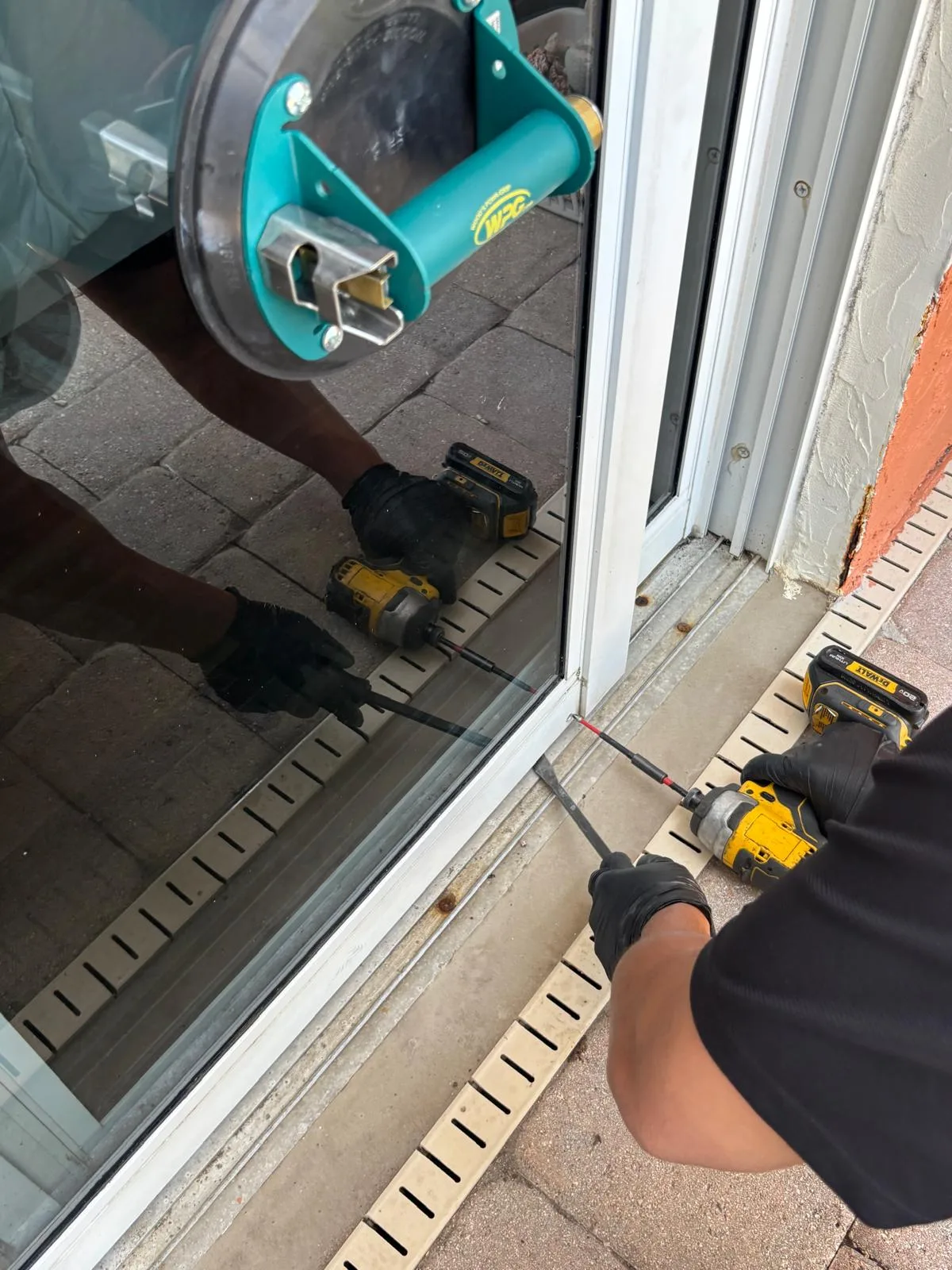
The one-finger test
After every roller replacement, we slide the door with one finger. If it takes more effort than that, we adjust until it doesn't. That's the standard. A properly rolling door shouldn't squeak, stick, or take any real effort to open.
How Florida Humidity Makes Squeaking Worse
Treasure Coast homes deal with squeaking more than homes in drier parts of the country. There's a reason for that. NOAA data shows the Treasure Coast averages 75-80% relative humidity year-round. That moisture gets into roller bearings and promotes oxidation of the steel components. It also causes fine sand particles to stick to the track instead of blowing away.
Homes near the coast, along the St. Lucie River, or backing onto canals get hit the hardest. Salt-laden air from the Atlantic accelerates corrosion. We see rollers die in 5-6 years on Hutchinson Island condos where they'd last 10-12 years in a drier climate. Regular maintenance every 3-4 months is the best defense against humidity-related squeaking.
What Not to Put on Your Sliding Door
We've seen it all. Homeowners trying to fix squeaking with products that make things worse. Here's the don't-do list.
- WD-40: Strips grease, attracts dirt, goes gummy. Worst choice for sliding doors.
- Cooking oil or vegetable spray: Goes rancid, attracts ants, creates a sticky mess in the track.
- Petroleum jelly (Vaseline): Too thick for tracks. Attracts sand and debris. Creates a paste that clogs the roller wheels.
- Bar soap: Yes, people rub bar soap on the track. It works for about one day, then builds up into a waxy film that causes more friction.
- Motor oil: Attracts dirt immediately. Stains the track and the floor. Don't.
The only products that belong on your sliding door are dry silicone spray for the track, and silicone-based grease (not oil) if you're lubricating the roller bearings directly. That's it. Keep everything else away from the track.
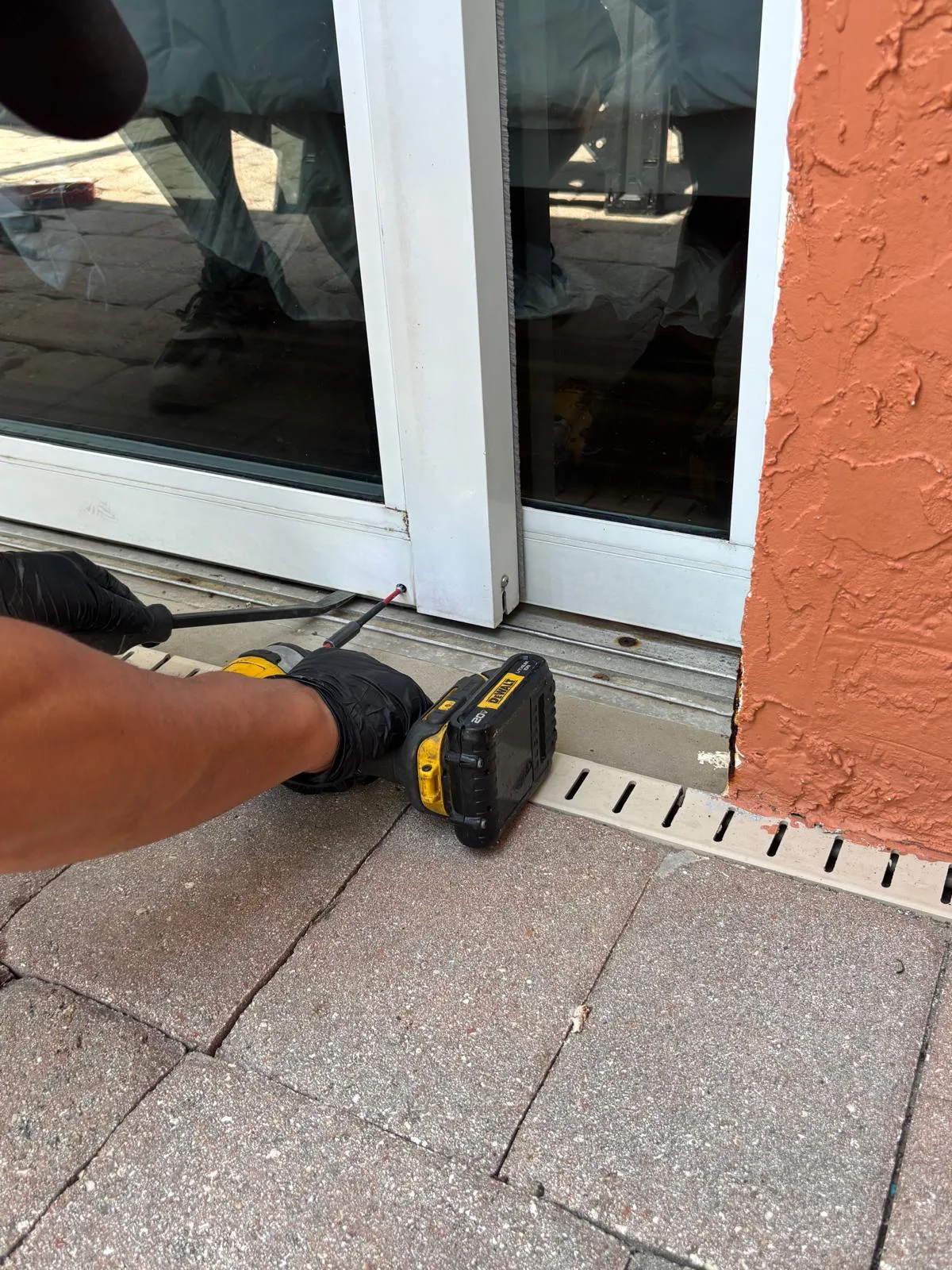
When to call us
If you've tried track cleaning and silicone and the squeak comes back within a week, call (772) 207-4146. We'll inspect the rollers, tell you honestly if they can be serviced or need replacing, and give you an exact price before we start any work.
Maintenance Schedule to Prevent Squeaking
Fifteen minutes of preventive maintenance every few months keeps your door quiet and your rollers alive longer. Here's the schedule we recommend for Treasure Coast homes.
- Every 3-4 months (inland homes): Vacuum and brush the track. Apply silicone spray. Check for pebbles or debris.
- Every 2-3 months (coastal/waterfront homes): Same cleaning routine, plus wipe the roller adjustment area with a dry cloth to remove salt residue.
- Once a year: Check the roller height adjustment. Make sure the door sits level and the weatherstripping makes full contact when closed.
- Before hurricane season (May): Full track cleaning, silicone application, lock check, and weatherstripping inspection. A door that squeaks probably won't seal properly in a storm.