
Some sliding door lock issues in Stuart are safe to DIY, like cleaning, lubrication, and minor latch adjustments. Anything involving the lock cylinder, security hardware, or Florida Building Code compliance needs a professional. Lock repair from Treasure Coast Sliding Door Repair runs $89–$249 depending on the fix, and our team can usually have your door secure the same day.
Here's the straight answer: yes, you can handle some sliding door lock repairs yourself, but a surprisingly large number of jobs in Stuart go sideways when homeowners try to tackle more than they should. We've been repairing sliding door locks across Martin County since 2009, and we've seen it firsthand. A small latch problem turns into a broken door frame. A DIY fix that "mostly works" leaves a home unsecured overnight. It happens more than you'd think. The Treasure Coast climate is a big part of why locks fail here faster than in other parts of the country. Salt air off the St. Lucie River, the summer humidity, and the constant heat cycle work together to corrode lock hardware, swell door frames, and degrade the plastic and metal components inside your lock mechanism. We'd estimate that roughly 70% of the lock repair calls we get in Stuart involve some degree of corrosion or salt damage, not just normal wear. That changes what you can safely fix on your own. This guide walks you through exactly where that line is.
What's Actually Safe to DIY on a Sliding Door Lock
Let's be honest with you. There are a handful of things you can absolutely handle yourself without any special training or tools. These are low-risk tasks that won't compromise your home's security if you do them carefully.
- Cleaning the lock track and latch face with a damp cloth and mild degreaser
- Lubricating the latch mechanism with a dry PTFE spray (not WD-40, which attracts dirt)
- Tightening loose screws on the interior handle plate if they're just backing out
- Adjusting the strike plate position if the door is latching but not catching cleanly
When You Need a Professional: Don't Guess on These
Some repairs look straightforward but carry real risk if you get them wrong. Here in Stuart, we see the consequences of DIY overreach pretty regularly. Call a professional when you're dealing with any of these situations:
- The lock cylinder is seized, cracked, or won't turn at all
- The door doesn't fully latch or lock, even after cleaning
- The handle is loose and wiggling at the base plate (frame damage is likely)
- You can see visible rust or corrosion inside the lock body
- The door has been broken into or forced open
- You're replacing the entire lock set and want it to meet Florida Building Code 8th Edition requirements
- Your home is in a wind zone area, which applies to most of coastal Martin County
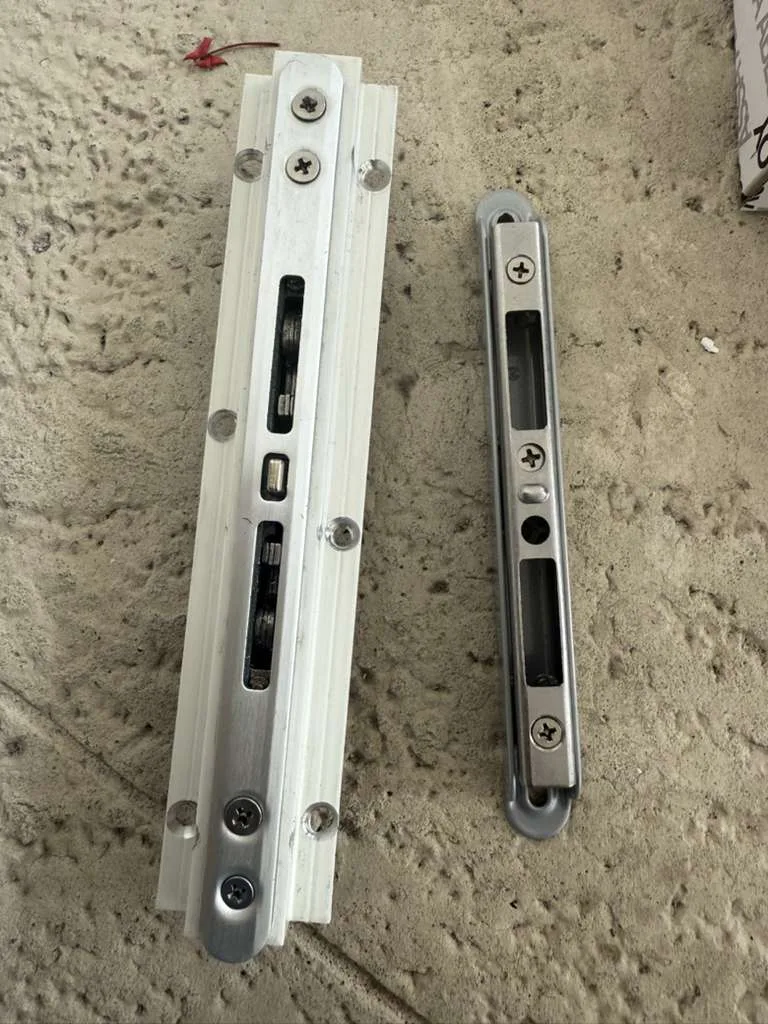
Salt Air Does More Damage Than You'd Expect
This is what a lock looks like after a few years of Treasure Coast humidity and salt air without regular maintenance. The corrosion you're seeing isn't just on the surface. It works its way into the cylinder and latch mechanism, making the whole assembly unreliable and often impossible to repair without replacement. If your home is within a mile of the water in Stuart, this is a timeline you're already on.
Tools You'll Need for Basic DIY Lock Maintenance
If you're going to handle the safe stuff yourself, here's what you actually need. Nothing fancy, and most of it you probably already have.
- Phillips and flathead screwdrivers in multiple sizes
- Dry PTFE lubricant spray (available at most hardware stores for around $8–$12)
- Needle-nose pliers for minor adjustments
- Flashlight or phone light to actually see inside the track and latch
- Allen wrench set if your handle has a set screw underneath
- Cotton swabs and isopropyl alcohol for cleaning tight spaces in the lock face
The Real Risks of Getting DIY Lock Repair Wrong
We're not trying to scare you out of doing your own maintenance. But we want you to understand what's actually at stake when the repair goes wrong. Security risk: A lock that feels like it's working but isn't fully engaged is worse than a lock you know is broken. You might go to bed thinking your home is secured when it isn't. Code compliance risk: In Martin County, replacement lock hardware on sliding glass doors that face the exterior must meet Florida Building Code 8th Edition specs for impact resistance and cycle testing. Installing non-compliant hardware can void permits and cause insurance headaches. Door frame damage: We've seen homeowners strip the screw channels in a door frame trying to reinstall a handle plate. At that point, the repair cost jumps significantly because you've turned a lock problem into a structural one. Warranty issues: Some newer doors have manufacturer warranties that are voided by DIY hardware work. If you're in a newer development in Stuart, it's worth checking your documentation before you start. We've completed 3,500+ sliding door repairs since 2009, and a meaningful portion of those calls came from DIY attempts that needed professional correction. We're not judging. We're just saying it happens, and it's avoidable.
Quick Cost Reality Check: DIY vs. Professional Lock Repair
DIY lock maintenance (cleaning and lubrication): $0–$15 in supplies, 20–30 minutes of your time. Low risk. DIY lock replacement attempt gone wrong: $40–$80 in parts, plus $89–$249 for a pro to fix the result. Professional lock repair from Treasure Coast Sliding Door Repair: $89–$249 depending on the issue, typically done in under an hour, with a warranty on the work. If you're dealing with anything more than basic maintenance, the professional route usually costs less total when you factor in the risk of mistakes.
Lock Repair Pricing in Stuart, FL: What to Expect in 2026
We get this question a lot, so let's put some real numbers on the table. Here's what lock repair typically costs depending on what's wrong:
- Latch adjustment and lubrication: $89–$109
- Handle and latch set replacement: $109–$149
- Lock cylinder replacement: $129–$179
- Full lock assembly replacement with hardware: $179–$249
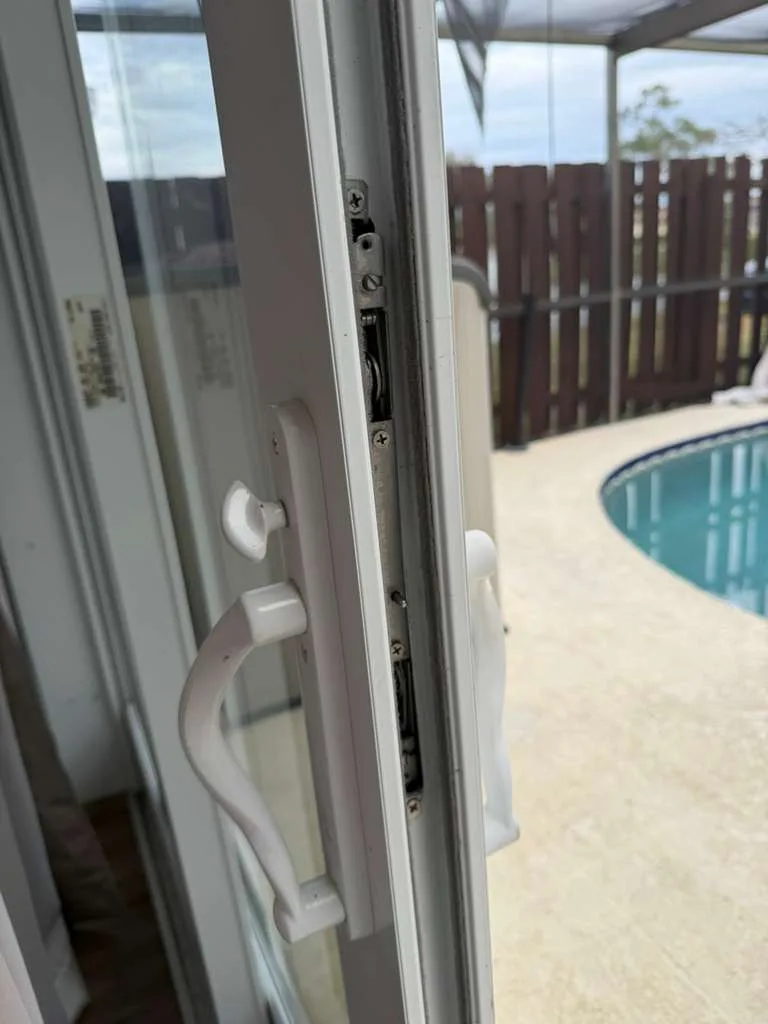
What a Pro Repair Actually Looks Like
When our team handles a lock replacement, we're not just swapping the part. We check the door alignment, inspect the frame for corrosion or damage, verify the strike plate position, and test the lock through multiple cycles before we call it done. That's the difference between a part that fits and a repair that lasts in the Treasure Coast climate.
How to Tell If Your Lock Problem Is Really a Door Alignment Problem
Here's something a lot of Stuart homeowners don't realize. Sometimes what looks like a lock problem is actually the door itself being out of alignment. If your lock is hard to engage, if the latch doesn't seat cleanly, or if you have to lift the door handle to get it to lock, the issue may be your rollers or track, not the lock hardware at all. We'd estimate that about 40% of lock repair calls we receive turn out to involve roller or track issues contributing to the problem. A misaligned door puts uneven stress on the latch and strike plate, and no amount of lock adjustment will fix that until the door sits correctly. Signs that alignment might be your real issue:
- The door drags or scrapes when you open it
- There's a visible gap at the top or bottom corner when it's closed
- The latch engages but the door still feels loose in the frame