Some sliding door lock issues, like tightening loose screws or cleaning a sticky latch, are safe to DIY with basic tools. But most lock failures in Fort Pierce come from salt air corrosion, frame warping, or worn internal mechanisms that need a professional. Our lock repair service runs $89–$249, and getting it wrong the first time usually costs more than calling us from the start.
Here's the honest answer most people don't get until after they've already stripped a screw or cracked a frame: yes, you can handle some sliding door lock repairs yourself, but a surprising number of them really do need a pro. It's not about being handy. It's about knowing what's actually broken and what it takes to fix it right. We've been doing lock repair in Fort Pierce since 2009, and in that time we've completed repairs on over 3,500 sliding doors across St. Lucie County. About 40% of the lock calls we get started as a DIY attempt that made things worse. That's not a knock on homeowners. It's just that sliding door locks fail in ways that aren't obvious, and the Treasure Coast climate makes it even harder to diagnose without experience. This guide walks you through what's safe to tackle yourself, what's not, what tools you'll actually need, and what the real risks are if you guess wrong. We'll also give you straight numbers on cost, so you can make a smart call either way.
What's Actually Making Your Lock Fail?
Before you decide whether to DIY or call someone, you need to understand why sliding door locks fail in the first place. In Fort Pierce, the answer is almost always one of four things. First, salt air corrosion. Homes near the Indian River Lagoon or Hutchinson Island deal with airborne salt year-round. It oxidizes metal components inside the lock housing faster than most people expect. Second, humidity warping. Florida's moisture causes door frames and tracks to shift slightly over time, misaligning the latch with the strike plate. Third, worn internal mechanisms. The hook bolt, cam, or spring inside the lock body just wears out after years of use. Fourth, physical damage. Forced entry attempts or kids slamming the door can bend components in ways that aren't visible from the outside. We've found that roughly 65% of lock failures we diagnose in the Fort Pierce area involve at least two of these causes working together. That's part of why a quick fix often doesn't stick.
What's Safe to Do Yourself
Some lock issues genuinely are DIY-friendly, and we'd never tell you to call us when you don't need to. Here's what you can reasonably handle at home:
- Tightening loose mounting screws on the lock handle or strike plate. A Phillips screwdriver and two minutes is all it takes.
- Lubricating a sticky latch with a dry silicone or PTFE spray. Avoid WD-40 on lock mechanisms. It attracts dirt and gums things up faster in humid climates.
- Cleaning visible corrosion on the exterior handle with a soft brush and a light rust remover.
- Adjusting the strike plate by a millimeter or two when the latch isn't catching cleanly. This involves loosening two screws and tapping the plate slightly.
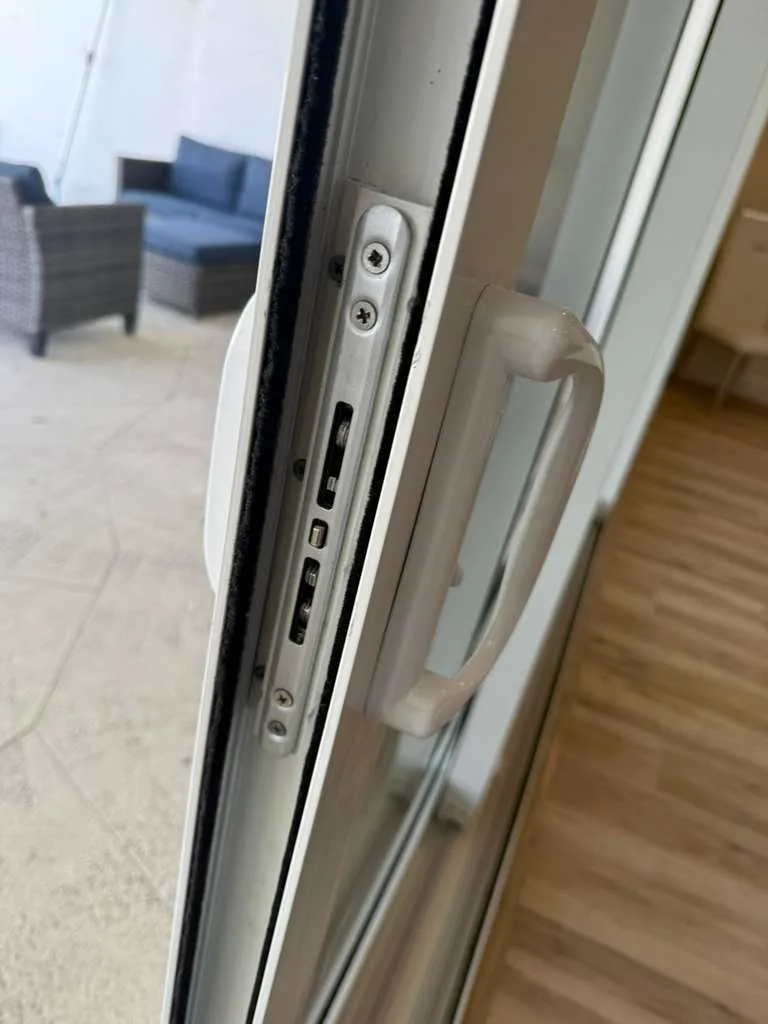
The Treasure Coast Climate Is Hard on Locks
This is what salt air corrosion actually looks like up close on a sliding door lock in the Fort Pierce area. The pitting and oxidation you see here happens inside the mechanism too, not just on the surface. Once corrosion reaches the internal spring or cam, lubricant alone won't fix it.
What Needs a Professional (and Why)
Here's where we see DIY attempts go sideways most often. These are the repairs that look straightforward but aren't:
- Replacing the lock cylinder or hook bolt assembly. Getting the right part for your specific door brand matters a lot. Andersen, PGT, and CGI all use different lock bodies, and using the wrong one voids your door's compliance with Florida Building Code 8th Edition wind load requirements.
- Realigning a warped frame. If the door frame itself has shifted, no amount of strike plate adjustment will create a reliable lock. You need to address the frame first.
- Keyed lock rekeying or cylinder replacement. This is technically possible to DIY, but a mistake here is a security risk, not just a mechanical one.
- Multi-point lock systems. These locks engage at multiple points along the door edge and require precise alignment to work. They're common in newer Fort Pierce homes built after 2010.
Important: Lock Failures Can Affect Your Homeowner's Insurance
In St. Lucie County, some homeowner's insurance policies require that sliding door locks meet current Florida Building Code standards, specifically the FBC 8th Edition specifications for wind zone compliance. If you replace a lock with a non-compliant part and then file a claim after storm damage, your insurer may push back. When in doubt, ask us about code-compliant replacement options before you buy anything at a hardware store.
Tools You'll Need for DIY Lock Repairs
If you've decided to try a basic repair yourself, here's an honest tool list. We're not padding this.
- Phillips and flathead screwdrivers in multiple sizes. Sliding door hardware uses both, sometimes in the same assembly.
- Needle-nose pliers for reaching inside the lock housing if you're replacing a worn spring.
- PTFE or silicone spray lubricant. Budget around $8–$12 for a quality can.
- A small wire brush for surface corrosion cleanup.
- A multimeter if your door has an electronic lock component.
- Replacement parts sourced from your door manufacturer. Don't guess at a big-box hardware store. Call the manufacturer with your door's model number first.
Real Risks of Getting It Wrong
We're not trying to scare anyone. But here's what we've actually seen happen when DIY lock repairs go wrong in Fort Pierce homes. Security gaps. A lock that appears to engage but doesn't fully seat is worse than a lock you know is broken. You might go to bed thinking the door is secured when it isn't. Frame damage. Over-tightening screws in a misaligned frame can crack the door frame or strip anchor points. Fixing that costs significantly more than the lock repair would have. Wrong parts causing compliance issues. As we mentioned above, non-compliant lock hardware is a real problem in wind zone areas. Fort Pierce sits in a high-wind zone, and replacement hardware needs to meet those specs. Voided warranties. Many sliding door manufacturers will void the door warranty if unauthorized repairs are performed on the locking system. If your lock isn't working right and you're not 100% sure what's wrong, it's worth a call. Our team serves all of Fort Pierce and the surrounding St. Lucie County area, and we give you a straight answer before we start any work. You can learn more about sliding door lock security to understand what a properly functioning lock should feel like.
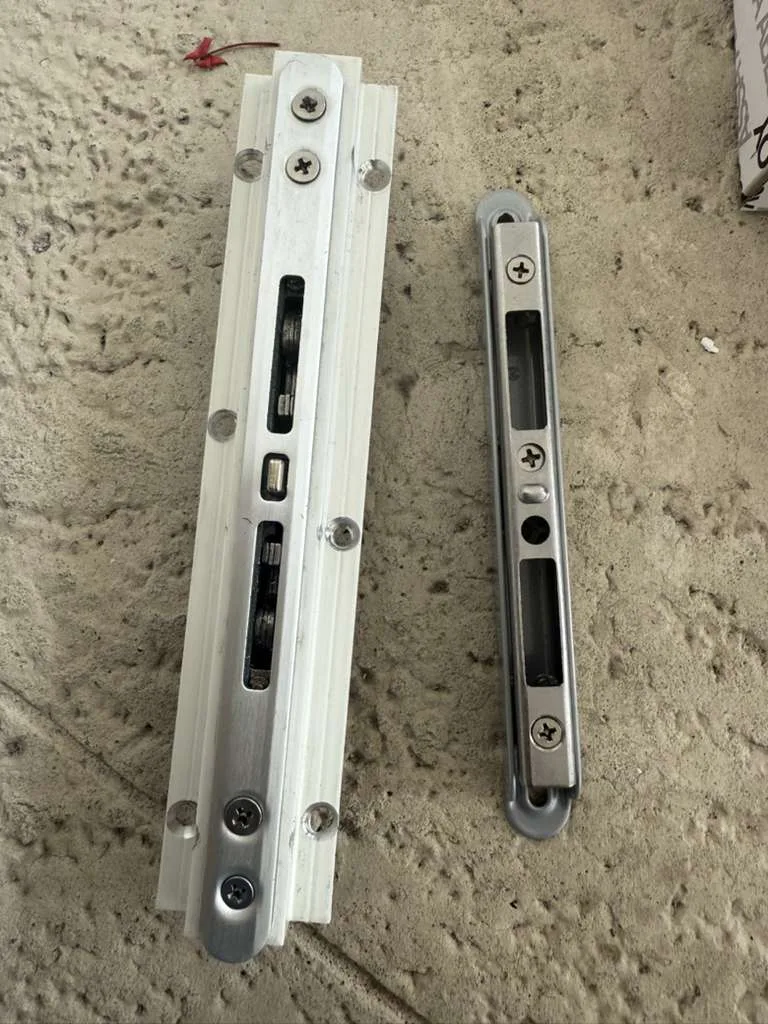
Multi-Point Locks Require Precise Alignment
Multi-point locking systems like this one are increasingly common in Fort Pierce homes built after the 2004 hurricane season prompted stricter building standards. Each engagement point has to align within about 1/16 of an inch for the lock to function and meet Florida Building Code requirements. That kind of precision is hard to achieve without the right tools and experience.
How Much Does Professional Lock Repair Cost in 2026?
We believe in straight pricing, so here's exactly what our lock repair service costs in Fort Pierce this year.
- Basic lock adjustment or latch repair: $89
- Lock mechanism replacement (single-point): $120–$175
- Multi-point lock system repair or replacement: $175–$249
- Keyed cylinder replacement with hardware: $130–$200