Some panic bar repairs are safe to DIY, like tightening loose hardware or cleaning a sticky latch. But anything involving the internal mechanism, door alignment, or fire code compliance needs a licensed pro. In Fort Pierce, professional panic bar repair runs $150 to $500 depending on the issue. Don't risk a failed inspection or a door that won't open in an emergency.

Here's the straight answer: yes, you can handle some panic bar repairs yourself, but a surprising number of them need a professional, especially here on the Treasure Coast where salt air and humidity eat through hardware faster than almost anywhere else in Florida. We've been repairing panic bars and commercial doors in Fort Pierce since 2009, and we've seen plenty of well-meaning DIY attempts that turned a $150 fix into a $500 job. This guide walks you through exactly what's safe to tackle on your own, what you should hand off to a pro, what tools you'll need, and what the real risks are when something goes wrong. Our team has completed 3,500+ door repairs across St. Lucie County, and we hold a 4.9-star rating from Fort Pierce customers who've trusted us with everything from sticky latches to full panic bar replacements. Whether you're managing a small business near downtown Fort Pierce or a multi-unit property out toward Lakewood Park, this guide is for you. You can also visit our panic bar repair service page for a quick overview of what we offer.
What Is a Panic Bar and Why Does It Fail?
A panic bar, sometimes called a crash bar or exit device, is the horizontal push bar mounted across commercial and multi-family doors. It's designed so anyone can exit fast in an emergency, no key, no fumbling. In Fort Pierce's coastal climate, humidity and salt air are the number one reason these devices fail prematurely. We'd estimate that roughly 70% of the panic bar calls we get in St. Lucie County involve corrosion as at least a contributing factor, not just wear and tear. Common failure points include the latch bolt that stops retracting, the push bar that feels sloppy or stiff, the internal spring mechanism that loses tension, and the mounting hardware that pulls away from the door frame. Some of these you can address yourself. Others require pulling apart the internal assembly, which is where most DIYers run into trouble. Knowing the difference before you grab a screwdriver is the whole point of this guide.
What's Actually Safe to DIY on a Panic Bar
Let's be direct. There are three repair categories where a handy building owner or facilities manager in Fort Pierce can reasonably handle things without calling us. First, tightening loose mounting screws and through-bolts. If the bar is wobbling but the internal mechanism still works, a screwdriver and a socket wrench are all you need. Check that the mounting plate is flush against the door and that all fasteners are snug. Second, cleaning and lubricating the latch and pivot points. Use a silicone-based spray, not WD-40. WD-40 attracts dust and makes things worse in Florida's humidity over time. Third, replacing worn strike plates when the latch is clearly the only problem and the strike plate is visibly damaged or misaligned. A basic strike plate costs $15 to $40 at most hardware stores. Beyond these three tasks, things get more complicated quickly. Our related guide on keeping doors running smooth covers lubrication tips that apply here too.
Salt Air Does Real Damage Here
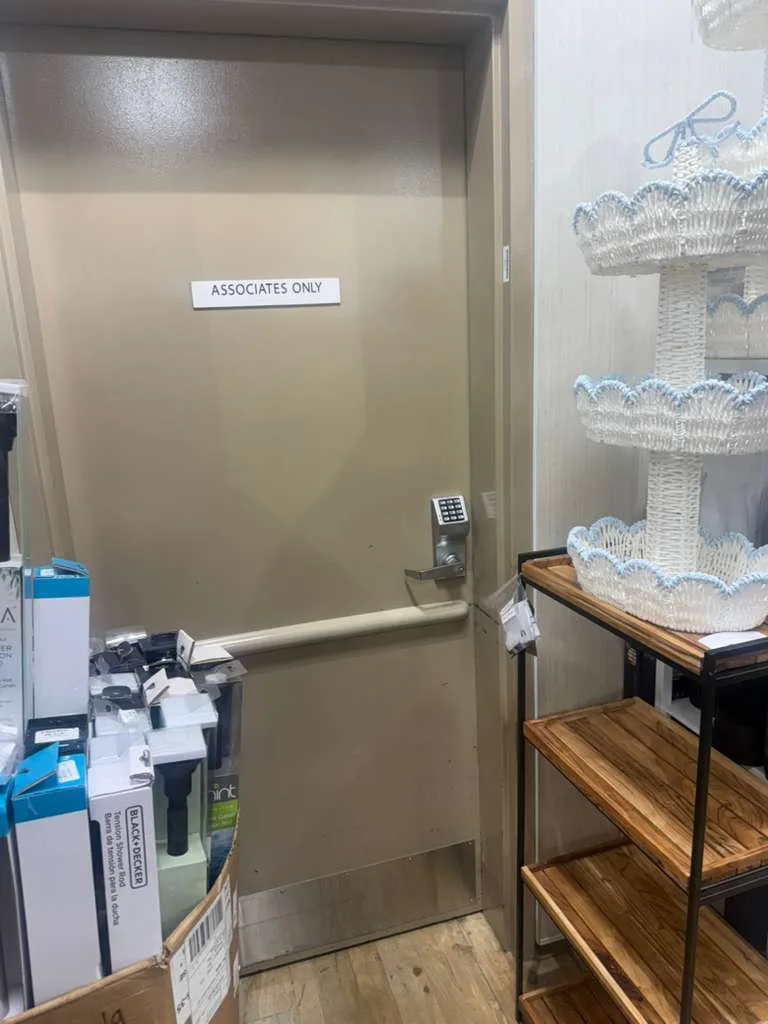
This is what a panic bar latch looks like after two years of exposure near Fort Pierce's waterfront without proper maintenance. The corrosion isn't just cosmetic. It binds the internal spring mechanism and causes the latch to stick or fail to retract at all. Fort Pierce's proximity to the Indian River Lagoon and the Atlantic makes this kind of accelerated corrosion a routine issue we handle that inland shops almost never see.
What You'll Need If You're Going the DIY Route
If you've decided to attempt a basic panic bar repair yourself, here's an honest list of what you'll need before you start. Going in without the right tools is how small jobs turn into expensive ones.
- Phillips and flathead screwdrivers in multiple sizes
- Socket wrench set with metric and standard options
- Silicone-based lubricant spray (not petroleum-based)
- Replacement strike plate if yours is visibly bent or corroded (budget $15 to $40)
- Threadlocker (Loctite Blue) to keep screws from backing out in Florida's heat cycles
- Torque screwdriver or drill with clutch to avoid over-tightening into hollow door material
- Manufacturer's installation manual for your specific device (most are available as PDFs from brands like Von Duprin, Dorma, or Falcon)
When You Need to Call a Professional in Fort Pierce
This is where we're going to be blunt with you, because getting this wrong has real consequences. You need a professional when:
- The internal spring mechanism is broken or has lost tension entirely
- The door is misaligned and the latch doesn't line up with the strike plate, because that's usually a frame or hinge issue, not a panic bar issue
- The device is fire-rated and part of a fire door assembly, any alteration requires compliance with Florida Building Code 8th Edition and NFPA 80
- The panic bar controls access to a stairwell, exit corridor, or assembly area, where local Fort Pierce building inspectors may require documented compliance
- You've already tried tightening and lubricating and it still doesn't work
Important: Fire Door Compliance in Florida
If your panic bar is mounted on a fire-rated door assembly, Florida Building Code 8th Edition and NFPA 80 require that any repair maintain the door's fire rating. DIY repairs on fire doors that aren't documented and compliant can result in failed inspections, insurance claim denials, and fines from St. Lucie County code enforcement. When in doubt, call a pro. It's not worth the liability.
The Real Risks of DIY Panic Bar Mistakes
We don't say this to scare you away from DIY. We say it because we've cleaned up the aftermath more times than we can count. Here's what actually goes wrong when panic bar repairs are done incorrectly. Risk 1: The door won't open in an emergency. A panic bar that appears to work but fails under pressure is the worst possible outcome. In a real emergency, a stuck exit door costs lives. Risk 2: You create a security vulnerability. Panic bars that aren't correctly tensioned can be manipulated from outside the building. We've seen this at a few properties near Fort Pierce's industrial corridor along Orange Avenue. Risk 3: You void the device warranty. Most commercial panic bar manufacturers void warranties when non-licensed technicians service the internal mechanism. Risk 4: You fail a Florida fire inspection. St. Lucie County fire marshals inspect exit devices in commercial buildings. A repair that looks fine but isn't code-compliant will flag on inspection. For more context on door problems that seem simple but aren't, check out our post on common door problems and how to fix them.
Professional Repair Looks Like This
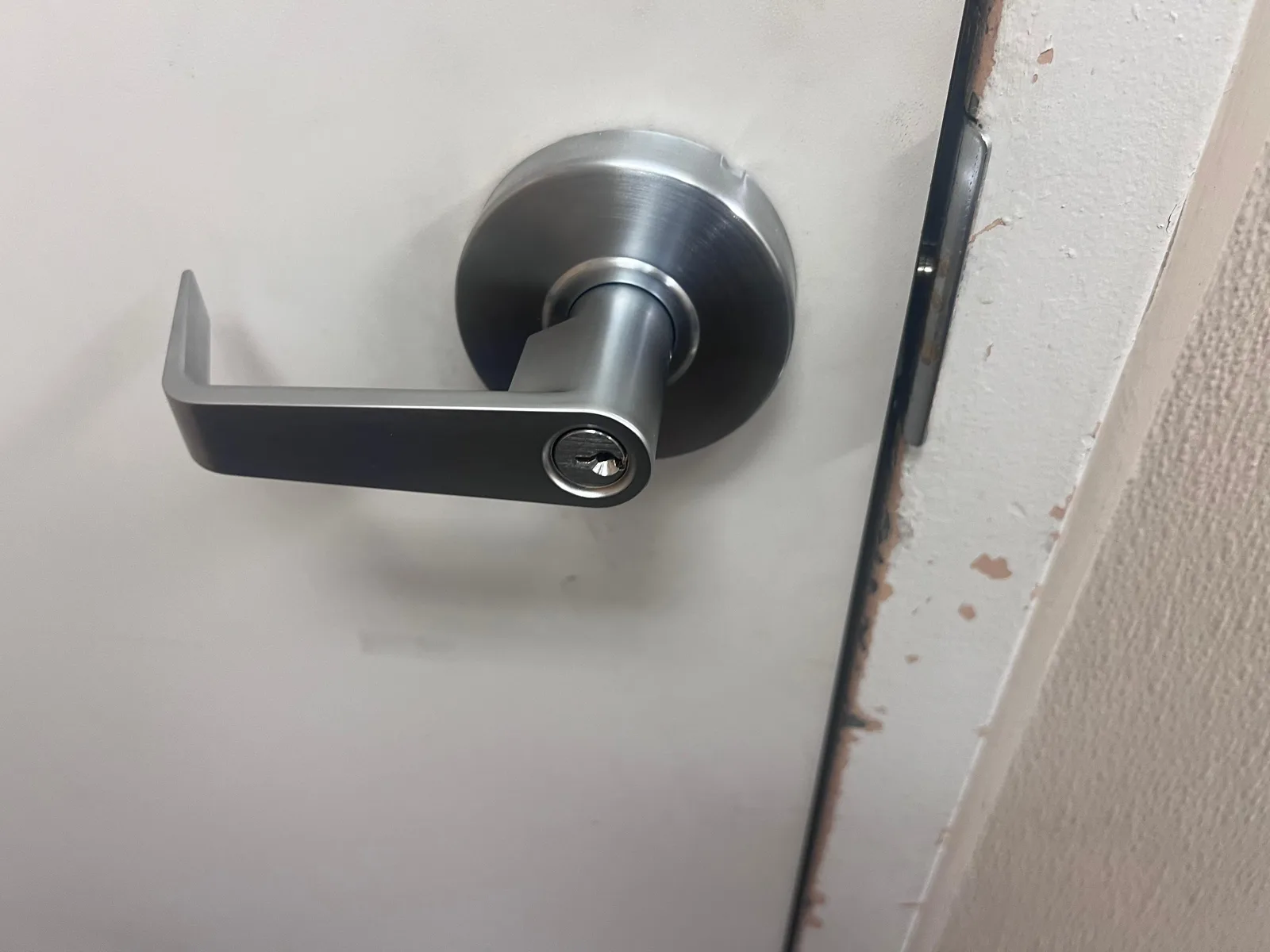
Our technicians arrive with the full range of parts for the most common commercial panic bar brands used in Fort Pierce and across St. Lucie County, so most repairs are completed in a single visit. We test every device for proper latch retraction, push force, and exterior access before we leave. That's the standard you can't always guarantee with a DIY repair.
What Does Panic Bar Repair Cost in Fort Pierce in 2026?
Here's the pricing breakdown you actually need. Panic bar repair in Fort Pierce runs $150 to $500 depending on what's wrong and what parts are needed.
- Latch adjustment or cleaning: $150 to $200
- Strike plate replacement: $150 to $225 (including labor)
- Internal spring mechanism repair: $200 to $350
- Full panic bar replacement (device only): $300 to $500+
- Fire door assembly recertification: Quoted case-by-case
How Fort Pierce's Climate Affects Your Repair Timeline
Most people don't realize how much the Treasure Coast climate shortens the maintenance cycle for commercial door hardware. Salt air from the Indian River and the Atlantic accelerates metal corrosion significantly. We recommend that Fort Pierce business owners inspect panic bar hardware every six months, not annually like you'd see recommended in manufacturer guides written for drier climates. Lubrication intervals should be shorter too. Where a business in Central Florida might re-lubricate a panic bar every 12 months, Fort Pierce properties benefit from doing it every 6 to 8 months. If your building is within a mile of the waterfront, like properties along Seaway Drive or near the Fort Pierce Inlet, you're dealing with even higher salt exposure and should consider hardware rated for coastal environments when it's time for replacement. For general door maintenance tips that account for Florida's climate, our guide on fixing stuck doors in Florida conditions has useful overlap for commercial doors too.