
The biggest signs you need sliding door roller replacement are grinding or scraping sounds, a door that's hard to lift or drag to open, visible wobbling on the track, and a door that won't stay on its track. In Port St. Lucie, salt air and humidity accelerate roller wear significantly. Replacement runs $149–$299 per panel. Don't wait - damaged rollers can warp your track and turn a simple fix into a much bigger job.

Your sliding door felt fine last year. Now it sounds like you're dragging furniture across a concrete floor every time you open it. Sound familiar? You're not alone. We've been repairing sliding doors on the Treasure Coast since 2009, and worn-out rollers are behind roughly 85% of the stuck or hard-to-open sliding doors we see in Port St. Lucie. In that time, we've replaced more than 3,500 sets of rollers across St. Lucie County alone. The good news: roller replacement is one of the most straightforward fixes we do. The cost runs $149–$299 per panel, and in most cases we're in and out the same day. The bad news: if you ignore the warning signs too long, damaged rollers start chewing up your track. Now you're looking at a bigger repair bill. So let's answer the question directly. The signs you need sliding door roller replacement include grinding or scraping noises, a door that requires real effort to move, visible side-to-side wobbling, a door that jumps or derails, and a noticeable gap at the bottom of the door when it's closed. Keep reading and we'll walk you through each one, what causes it, and how urgent it really is.
The 6 Warning Signs Your Rollers Are Worn Out
These are the six things we hear about most often from homeowners in Port St. Lucie before they call us. Any one of them is worth paying attention to. Two or more together? That's a strong signal it's time to schedule a roller replacement.
- Grinding or scraping sounds every time the door moves
- The door is hard to open or close, even after cleaning the track
- Visible wobbling or side-to-side movement as the door slides
- The door drops, drags on the track, or derails occasionally
- A gap at the bottom of the door when it's fully closed
- The door feels "catchy" - it moves smoothly in spots and catches in others
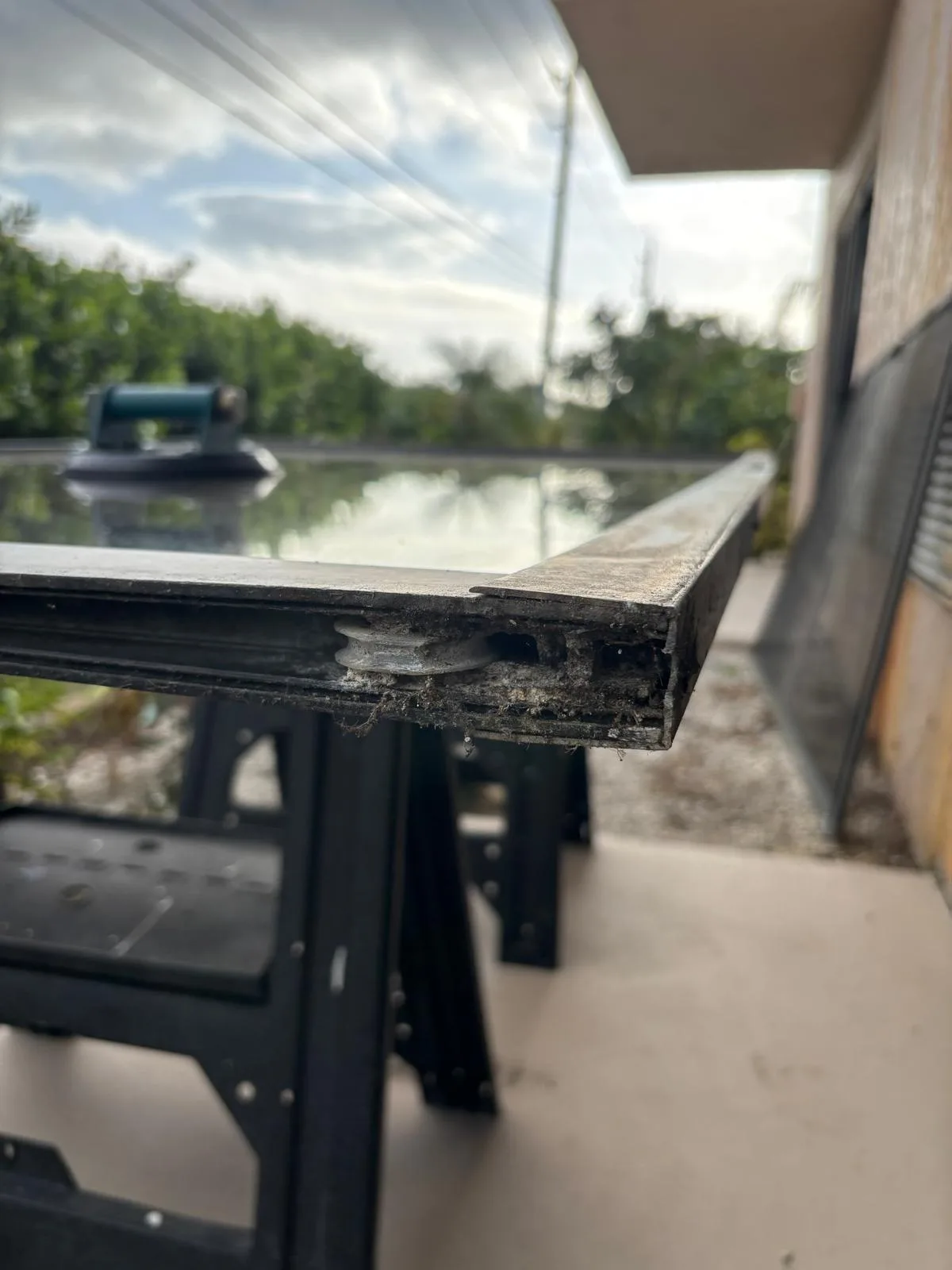
What a Worn Roller Actually Looks Like
This is a roller we pulled from a home near Tradition in Port St. Lucie. You can see the flat spot on the wheel where it stopped spinning and started grinding against the track. That kind of wear happens faster here on the Treasure Coast because salt air and humidity get inside the roller housing and cause the bearing to corrode. Once the bearing seizes, the wheel stops rolling entirely and the door is essentially being dragged on a piece of metal.
What Causes Rollers to Fail Faster in Port St. Lucie
Port St. Lucie sits close enough to the St. Lucie River and the coast that salt air is a real factor for most homes here. Salt air doesn't just affect your car or your gutters. It works its way into the roller housings on your sliding door and corrodes the steel bearings inside. Once those bearings rust, the wheel seizes. Instead of rolling, it drags. Humidity compounds the problem. Florida's moisture causes aluminum tracks to oxidize and swell slightly, which puts extra load on the rollers even when they're in decent shape. Add in UV exposure that degrades nylon rollers over time, and you've got a climate that's genuinely tough on sliding door hardware. We also see a lot of accelerated wear from homes that aren't cleaned and lubricated regularly. Dirt and sand build up in the track, the rollers grind through it, and wear happens in months instead of years. Our sliding door maintenance guide covers what you can do to extend roller life between service visits.
Urgency Levels: How Bad Is Your Situation Right Now?
Not every roller problem is a drop-everything emergency. Here's a realistic breakdown of urgency based on what we see in the field.
- Low urgency - slight resistance or mild noise: Your rollers are wearing but haven't failed. You've got time to schedule a visit, but don't put it off more than a month or two.
- Medium urgency - significant effort to open, grinding noise: Rollers are past their useful life. Every use is damaging the track. Schedule repair within 1–2 weeks.
- High urgency - door derails, won't stay on track, or you can see daylight at the bottom: This is both a security risk and a weather seal failure. In St. Lucie County's wind zone, a door that doesn't seat properly is a liability. Call us soon.
- Emergency - door is stuck open or won't lock: Call the same day. A sliding door that won't fully close or lock is a safety issue, full stop.
Don't Let Worn Rollers Destroy Your Track
Here's the thing most homeowners don't realize: worn rollers don't just wear out themselves. Once they start dragging instead of rolling, they score and gouge the aluminum track underneath. A roller replacement at $149–$299 per panel is straightforward. A track replacement on top of that adds significant cost. If your door is grinding, every day you wait is potentially adding to your repair bill. Call us before the track goes - we serve all of Port St. Lucie and the surrounding Treasure Coast area.
Common Misdiagnoses: It's Not Always the Track
We get calls all the time from Port St. Lucie homeowners who've already tried cleaning the track, re-lubricating everything, and maybe even adjusting the door's height screws. The door still doesn't slide right. Here's why: those fixes address track and alignment issues, not roller failure. If the roller itself is worn, cracked, or seized, no amount of cleaning or lubrication will bring it back. The most common misdiagnosis we see: homeowners assume the track is bent or damaged and price out a full door replacement. In many cases, the track is fine and only the rollers need attention. We've written a full breakdown on replace vs. repair if you want to dig into that decision. Another common one: people assume the door is warped or that the frame has shifted. Sometimes that's true, especially after a storm. But more often, a door that seems misaligned is simply sitting low in the frame because the rollers have worn flat and lost their height. New rollers fix the alignment without touching the frame.
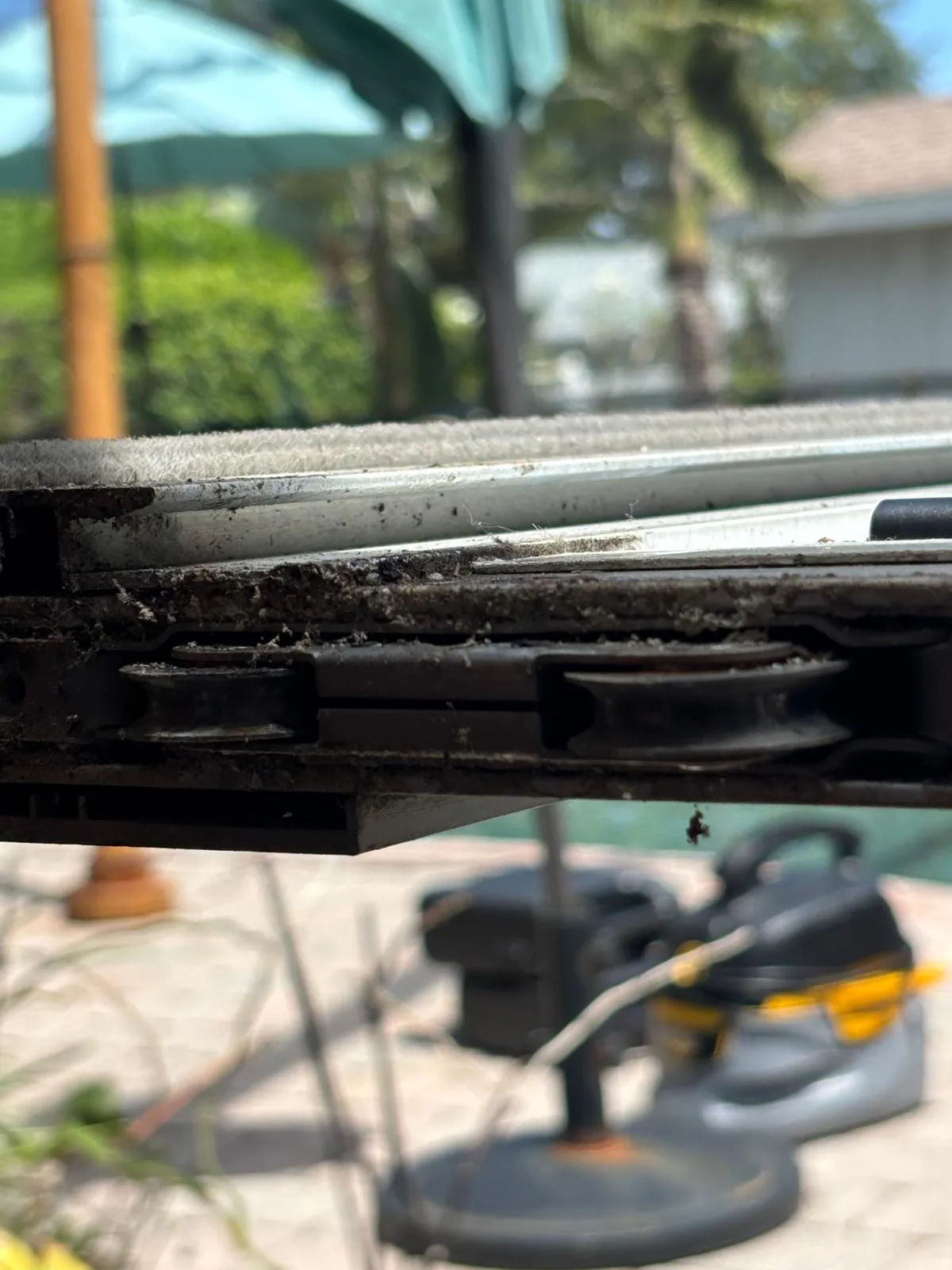
What Waiting Too Long Actually Does to Your Door
This is what a track looks like after a homeowner ran a seized roller on it for about a year. The scoring you see isn't cosmetic. Those grooves catch the new rollers and create noise and resistance even after replacement. In cases like this, we have to replace the track too, which adds cost and time to the repair. We see this more than we'd like to in Port St. Lucie, and it's entirely preventable. Catching the roller problem early keeps the repair simple and affordable.
What Happens During a Roller Replacement Service
If you haven't had this done before, here's what to expect when our team shows up. We start by lifting the door off the track to get full access to the roller housing in the bottom of the door frame. We remove the old rollers, inspect the track for scoring or damage, and install replacement rollers that match your door's manufacturer specs. Then we reinstall the door, adjust the height so it seats evenly, and test it through several full open-and-close cycles. The whole process typically takes 45 minutes to an hour and a half depending on the door size and how accessible the rollers are. We stock rollers for most major brands used in St. Lucie County homes, so we're rarely waiting on parts. Pricing for sliding door roller replacement runs $149–$299 per panel depending on door size, roller type, and whether any track work is needed. We give you a clear number before we start. No surprises. We've earned a 4.9-star rating across 47 Google reviews since 2009, and that reputation matters to us. Check out our Port St. Lucie service area page to see what neighbors in your area have said.
Florida Building Code and Why Proper Rollers Matter for Compliance
This one surprises a lot of homeowners. Under the Florida Building Code 8th Edition, sliding glass doors in St. Lucie County's wind zone must maintain their rated performance for both wind load and water infiltration. When rollers fail and a door no longer seats properly in the frame, it can compromise both. If you're in a neighborhood that gets inspected for insurance purposes, or if you're getting ready to sell your home, a sliding door that doesn't seat flush and operate smoothly can raise flags. Homeowners insurance providers in Florida have tightened their inspection standards significantly, and a failing sliding door is a line item some inspectors flag. Proper roller replacement restores the door to its designed operating position, which means it seats correctly in the frame and maintains the seals that keep wind and water out. It's not just about convenience. It's about the door doing its job the way it was built to.
Roller Replacement Cost Comparison: What Affects Your Price
We want to be upfront about pricing because it's one of the first things people ask about. Here's what affects where your project lands in the $149–$299 per panel range.
- Standard single-panel door (36"–48" wide): Usually toward the lower end of the range. Straightforward roller access and common parts.
- Large or heavy patio door (60"+ wide, thicker glass): Heavier doors need heavier-duty rollers and more labor to safely remove and reinstall. Toward the higher end.
- Tandem or stacking door systems: Each panel is priced individually. Multi-panel systems are more work but we price each panel fairly.
- Track damage present: If the existing track has scoring from worn rollers, we'll quote track work separately. We'll always show you what we find before adding anything.
- Roller type and brand: OEM rollers for specific door brands can run slightly higher than standard aftermarket options. We'll tell you which applies to your door.