
Some hurricane impact door repairs in Port St. Lucie are safe to DIY, like cleaning tracks and lubricating rollers. But anything involving the door frame, glass integrity, or hardware that affects storm certification needs a licensed professional. Repairs typically run $200–$800 depending on the damage. Getting it wrong isn't just inconvenient. It can void your insurance coverage and leave your home exposed during a storm.

Here's the short answer: yes, you can handle some hurricane impact door repairs yourself, but the keyword there is "some." We've been repairing impact doors across Port St. Lucie and the wider Treasure Coast since 2009, and we've seen a lot of well-meaning DIY attempts that ended up costing homeowners far more than a professional visit would have. That said, we're not going to tell you to call us for everything. Some fixes are genuinely simple, and we'd rather you know the difference. In St. Lucie County, hurricane impact doors aren't just a nice upgrade. They're tied to your insurance discounts, your Florida Building Code compliance under the FBC 8th Edition, and your actual storm protection. So when something goes wrong with one, the stakes are higher than a standard interior door. We've completed over 3,500 impact door and sliding door repairs since 2009, which gives us a pretty clear picture of what breaks, why it breaks, and who should be fixing it.
What's Actually Safe to DIY on an Impact Door
Let's start with the good news. There are a handful of maintenance tasks that any reasonably handy homeowner can handle without risking the door's performance or certification. We're talking about surface-level stuff, not anything structural.
- Cleaning the track: Salt air and humidity in Port St. Lucie turn tracks into grime magnets. A stiff brush, warm water, and a little elbow grease go a long way.
- Lubricating rollers: Use a silicone-based spray, not WD-40. This one's worth doing every six months near the coast.
- Adjusting the door sweep: If your door sweep isn't sealing properly but the frame is fine, you can often replace it yourself with hardware store parts.
- Tightening visible hardware: Screws on handles and hinges back out over time. A screwdriver fixes that.
What You Should Never DIY on a Hurricane Impact Door
This is where it gets serious. About 70% of the impact door repair calls we get in Port St. Lucie involve damage that someone either caused themselves or made worse trying to fix. Here's what you shouldn't touch without a licensed contractor:
- Glass replacement or resealing: Impact glass is a laminated system. If the inner membrane is compromised, the door fails its rating. You can't fix that with hardware store caulk.
- Frame damage or misalignment: A bent or cracked frame changes how the door performs under wind load. This isn't cosmetic.
- Replacing the entire door unit: Impact doors in St. Lucie County require permitted installation under FBC 8th Edition. A non-permitted install can trigger issues at sale or during an insurance claim.
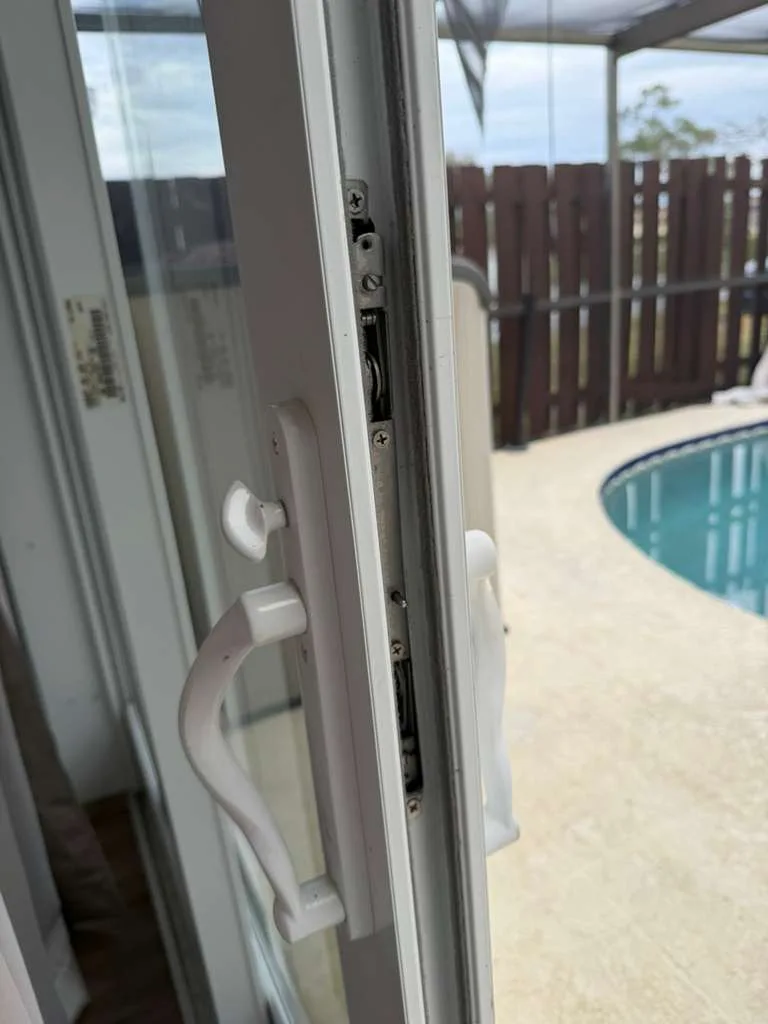
- Lock mechanism failures on the main entry: These are often tied to the multi-point locking systems that keep the door sealed during a storm.
Coastal Conditions Make Impact Doors Work Harder
Port St. Lucie sits right on the edge of the Treasure Coast, where salt air off the St. Lucie River and the Atlantic pushes corrosion into door frames, rollers, and hardware faster than most homeowners expect. We see frame degradation and seal failures here that just don't show up at the same rate inland. That's why what looks like a minor issue often runs deeper than the surface.
Tools You'd Need for a Real Impact Door Repair
If you're still weighing the DIY option, here's an honest look at what a proper repair actually requires. We're not listing this to scare you off. We're listing it so you can make a realistic call.
- Torque wrench and calibrated drivers for hardware fasteners (specific torque specs vary by manufacturer)
- Glass suction cups rated for laminated safety glass (standard cups can damage the film)
- Glazing tools and approved impact-rated silicone sealant
- Plumb bob and level for frame realignment
- Drill with masonry bits if anchoring into a concrete or block wall, which is most homes in Port St. Lucie
- Manufacturer-specific replacement parts (not all rollers and hardware are interchangeable)
Insurance Warning: DIY Repairs Can Void Your Coverage
In Florida, your homeowner's insurance discount for hurricane impact doors depends on certified installation and current product approval documentation. With the 2026 sliding-door hardware standards update now in effect statewide, keeping your door system compliant has become critical for maintaining coverage eligibility. When you replace glass, reseal the frame, or make structural adjustments without a licensed contractor, insurers may deny claims by arguing your door no longer meets its original product approval rating. Along the Treasure Coast near the Port St. Lucie Inlet, we've documented claims delayed or rejected specifically because of this issue - particularly as salt-air corrosion accelerates hardware degradation during peak hurricane season preparation in August through October. Your certification isn't worth risking. Unsure whether your repair qualifies as a coverage-affecting modification? Contact us for a free consultation before you begin work.
DIY vs Professional Repair: A Side-by-Side Breakdown
Here's a straight comparison so you can see where the lines fall:
- Track cleaning and lubrication: DIY cost $10–$25 in supplies. Safe to DIY. No certification impact.
- Door sweep replacement: DIY cost $20–$60. Safe to DIY if frame is undamaged.
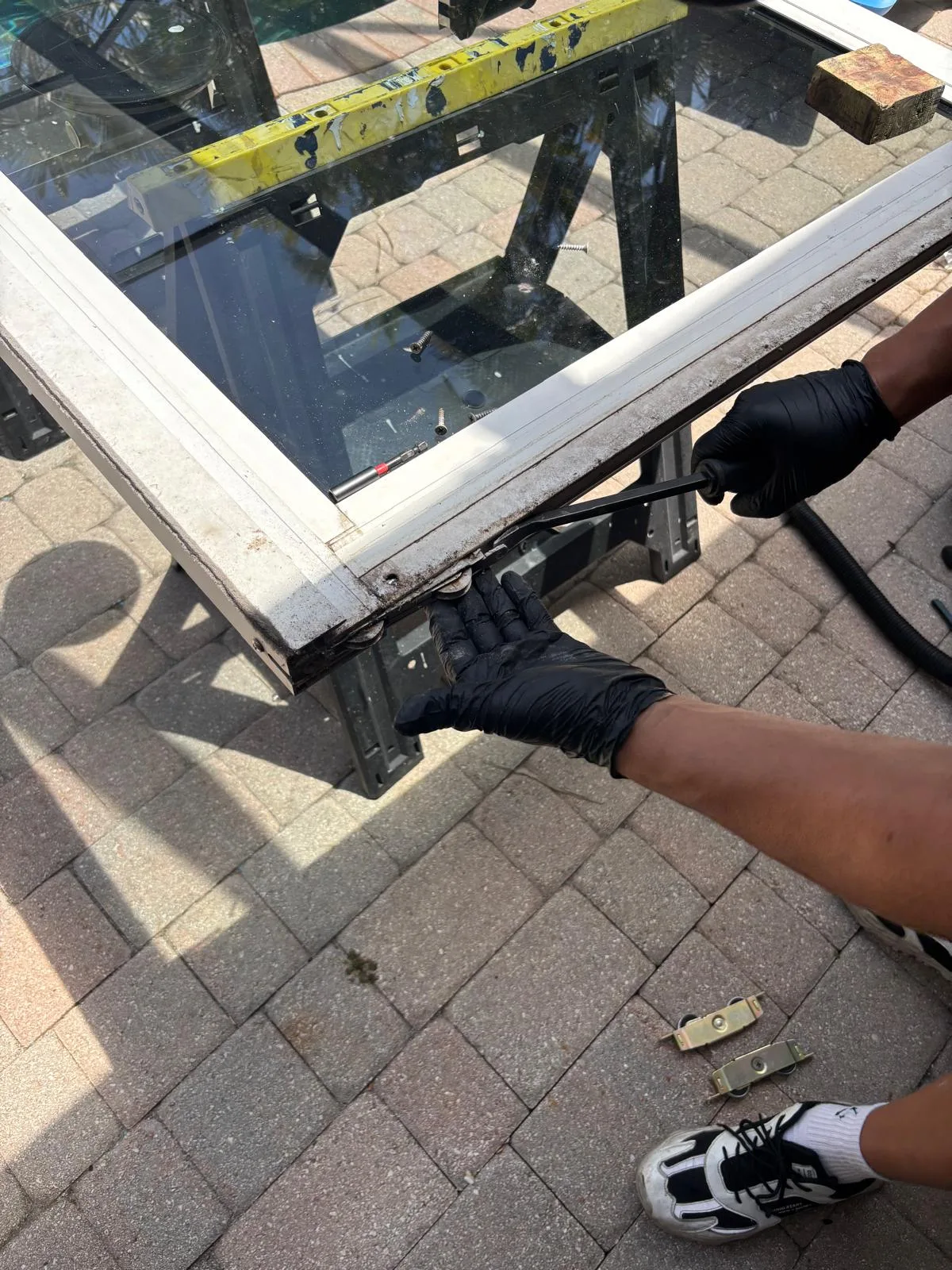
- Roller replacement: Professional cost typically $200–$350. Needs correct parts and proper torque. DIY risk is high if rollers aren't calibrated correctly for door weight.
- Hardware and lock repair: Professional cost $150–$400. Multi-point locks have precise tolerances. DIY often leads to misalignment.
- Glass chip or crack: Professional cost $300–$600. Never DIY. Laminated glass integrity can't be visually confirmed.
- Frame repair or realignment: Professional cost $400–$800. Requires permits in St. Lucie County. Always a pro job.
- Full door unit replacement: Professional cost varies. Always permitted. Never DIY.
The Detail Work That's Easy to Get Wrong
Roller replacement looks simple on video. But impact sliding doors in Port St. Lucie weigh 80 to 200 pounds depending on the glass thickness, and the roller housing has to be set at the exact height to keep the door square in its frame. We've seen doors where a DIY roller swap left a small gap at the top corner. That gap doesn't just let in rain. It changes the pressure seal during a storm and can cause the door to flex beyond its rated limits.
Why Port St. Lucie Homeowners Call Us Instead of Going It Alone
We've earned a 4.9-star rating across 47 Google reviews not by doing the bare minimum, but by being straight with people. Sometimes that means telling a homeowner they can handle something themselves. More often it means explaining why a repair that looks simple on the surface is actually tied to their home's wind resistance rating or their insurance status. Port St. Lucie sits in a High Velocity Hurricane Zone under Florida's wind map, and St. Lucie County enforces FBC 8th Edition standards for impact door installations and repairs. That's not bureaucratic noise. That's what stands between your home and a Category 3 storm pushing 130 mph gusts off the Atlantic. Neighborhoods like Tradition and Torino see high turnover in homes, and a lot of those buyers are doing pre-purchase inspections that flag impact door issues. A non-permitted repair discovered during that process can stall or kill a sale. We've been handling hurricane impact door repair on the Treasure Coast since 2009, and we'll give you a straight answer on whether your situation needs us or not.
How to Know When It's Time to Stop DIYing and Call a Pro
If you're on the fence, here's a simple set of signals that mean it's time to pick up the phone:
- The door is visibly out of square in the frame, top or bottom gap isn't even
- You can see any crack, chip, or cloudiness in the glass panel
- The door doesn't latch or lock fully on the first try
- You feel resistance or grinding when opening or closing after lubricating
- The frame has visible corrosion, soft spots, or separation from the wall
- You've already tried a DIY fix and it didn't hold